
Why Brazing Better Than Fusion Welding for Tungsten Carbide Parts?
The experience of working with tungsten carbide tooling multiple times will lead you to encounter the following situation: a carbide tip gets welded onto a steel shank, everything looks fine, and then it cracks, sometimes immediately, sometimes after a few hours of use. The material either becomes dislodged from its position or breaks apart into multiple pieces.
The problem becomes complicated because the system exhibits different failure modes. The system demonstrates two distinct failure mechanisms which include a complete joint fracture and a complete joint fracture and an internal carbide material breakage. The varying results make it difficult to determine the actual cause which leads engineers to suspect both filler material and operator skills before they discover the true problem which lies with the joining process.
The article explains the thermal behavior of tungsten carbide which leads to the creation of industrial problems through fusion welding and produces brazing as the preferred method for multiple industries from mining to medical device manufacturing.
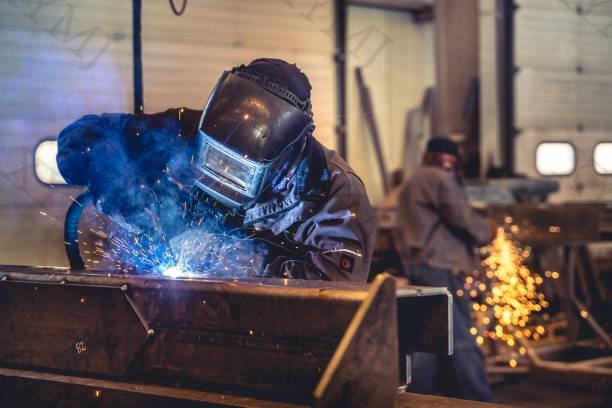
Why Fusion Welding Doesn’t Work Well for Tungsten Carbide
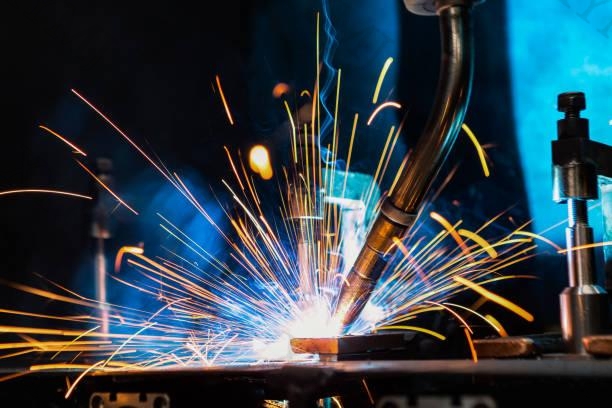
The process of fusion welding for TIG and MIG and arc welding methods requires operators to melt either the base material or the filler material to establish a weld joint. The method functions correctly with most metals. The method creates multiple problems for tungsten carbide which build upon each other.

The Thermal Expansion Mismatch
This is the most essential problem. When you weld carbide to steel, both materials heat up together. The cooling process causes steel to shrink at a faster rate than carbide. The result creates a major point of stress buildup that occurs directly at the connection point.
The welding process usually produces stress which does not lead to visible cracks. The failure occurs during the initial hours of operation or in some cases within the initial minutes. The joint needed a load to trigger the fracture because it already had structural weaknesses.
WC Decomposition at High Temperatures
Arc welding produces temperatures which usually reach values beyond 3,000°C. Tungsten carbide starts to decompose around 2,600°C, breaking down into W₂C (ditungsten carbide) and free carbon. Both of those phases show brittle characteristics. The joint creates a weak layer which becomes permanent after post-weld treatment because it forms during the welding process.
The impact of this effect exceeds minor boundaries. The joint strength decreases substantially because even short exposure to temperatures beyond the decomposition threshold results in phase changes.
Rapid Cooling Creates Microcracks
The material conducts heat because tungsten carbide functions as a thermal conductor. The material creates an advantage because it quickly conducts heat, but in welding operations the material enhances cooling speed for the area which surrounds the joint much more than it does for the joint itself. The temperature difference between two points produces another form of internal pressure, which affects the structure of the material.
Cobalt Binder Oxidation
The cobalt binder which connects the carbide grains begins to oxidize and sometimes volatilize when exposed to fusion welding temperatures. This process creates two problems because it weakens the material around the joint and generates porosity which serves as another potential failure point.
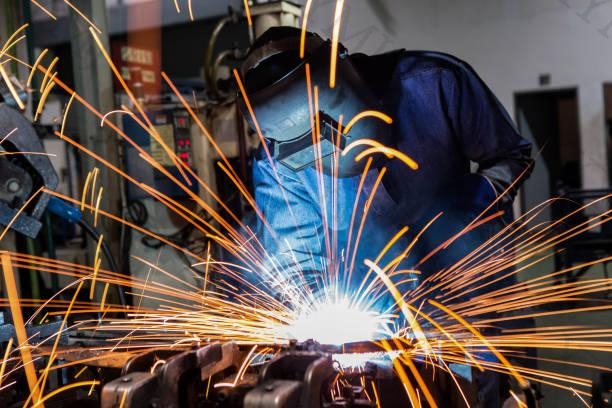
So Why Does Brazing Work?
Brazing solves most of these problems through one core principle because base materials remain intact without any melting process. The braze alloy functions as the filler metal which requires heating until it reaches its melting temperature that exists between the carbide and steel melting points. The filler material enters the joint space through capillary action while it wets all surfaces and then forms a solid connection. The carbide and steel themselves never get hot enough to change phase or decompose.
Tungsten carbide brazing temperatures typically range between 600°C and 1,000°C which depends on the chosen filler alloy. The temperature remains below 2,600°C which serves as the decomposition threshold for WC and stays outside the temperature range that triggers permanent damage through thermal expansion mismatches.
Lower Temperature Means Lower Stress
The expansion variation between carbide and steel maintains its existence at brazing temperatures but shows a decrease in proportionality. The braze alloy which typically maintains ductility as its primary property can reduce residual stress through plastic deformation during joint cooling. The thin layer of filler acts as a mechanical buffer between two materials that want to move at different rates.
Filler Alloy Selection Makes a Real Difference
Not every braze alloy is appropriate for tungsten carbide. The choice depends on the application, the cobalt content of the carbide, and the service environment.
| Filler Type | Working Temperature | Best For | Joint Strength |
| Silver-based (Ag-Cu-Zn) | 620–850°C | WC-Co, general tooling | High |
| Copper-based | 850–1,000°C | Lower-demand applications | Moderate |
| Active (Ti/Zr-containing) | 800–1,000°C | Low-Co or ceramic-bonded WC | High |
The most common application of silver-based alloys occurs because they provide reliable tungsten carbide wettability together with strong flexible joint formation. Active alloys are used when the carbide contains little or no cobalt because conventional fillers fail to wet the surface and active elements react with the carbide for adhesion.
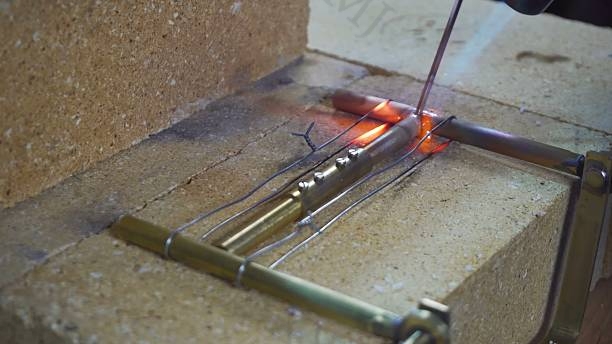
The Role of Interlayers
One detail that’s easy to overlook: inserting a thin layer of copper or nickel foil between the carbide and the steel before brazing. The interlayer functions as an extra layer of protection which helps withstand thermal expansion differences that the filler alloy cannot handle completely.
Brazed carbide joints typically achieve shear strengths of 150–350 MPa, depending on filler selection, surface preparation, and process control. The range provides enough strength for most industrial uses because cutting tools and wire drawing dies and mining bits and wear-resistant inserts all use brazed joints successfully.
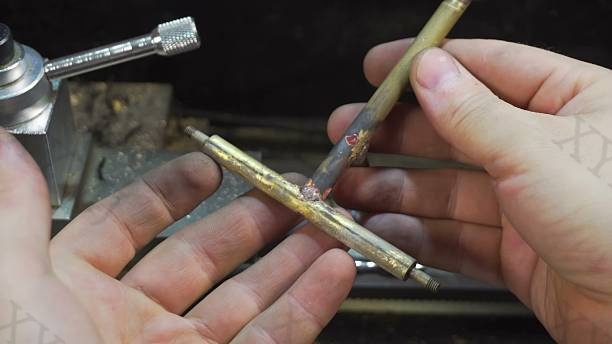
Process Control: Where Brazing Can Still Go Wrong
Brazing is easier to use than fusion welding yet it still permits mistakes to occur. The quality of a brazed joint depends heavily on execution, and there are several points in the process where things can go wrong quietly.
Surface preparation. The brazing process requires both carbide and steel materials to have clean surfaces which contain no oxide contaminants. The standard range for sandblasting or grinding operations extends from Ra 1.6 to Ra 3.2 μm. A contaminated surface leads to poor wetting — the filler won’t flow properly, and the joint will have voids.
How the filler is placed. The use of pre-placed shims which are thin foil rings or discs of filler alloy provides better results than paste for most production environments. Complex geometries and field repairs can use paste successfully, but it brings additional uncertainty into the process.
Heating method. Three methods are common, each with tradeoffs:
- Induction brazing heats the joint area quickly and locally, making it well-suited for high-volume production of standardized parts. The challenge is ensuring even heating around the full joint circumference.
- Furnace brazing provides the most uniform temperature distribution and is the right choice for complex assemblies or parts with tight tolerances.
- Flame brazing is flexible and requires minimal equipment, which makes it practical for single-part repairs or low-volume work. It demands more operator skill to control heat input consistently.
Temperature and hold time. The filler fails to properly wet the carbide surface when temperatures reach below the required threshold The joint appears complete yet it suffers from weak bond strength. The temperature exceeds the threshold because base materials start to dissolve into the filler and carbide decomposition begins.
Cooling rate. This particular point causes many good brazed joints to break. The carbide material develops thermal shock when it cools down rapidly from brazing temperatures which remain below welding temperatures. The standard procedure recommends using controlled slow cooling through either a furnace or insulation protection. The few minutes spent on this task provides worthwhile results.
Post-braze inspection. Dye penetrant testing (PT) enables detection of surface cracks which remain hidden from direct observation. The ultrasonic testing method enables scientists to find both internal voids and disbonds. Standard procedures need to include at least one of these methods for critical applications.
When Other Joining Methods Are Worth Considering
Brazing handles the majority of industrial carbide joining needs, but there are edge cases where other methods come into play.
Diffusion bonding establishes atomic-level joints through its process which requires extended heat and pressure application without using any filler material. The resulting joints are exceptionally strong and can approach the strength of the base materials. The downsides are high equipment cost, long cycle times, and tight requirements on surface flatness. This method is used in aerospace components and precision machinery where the performance requirement justifies the cost.
Laser welding creates a minimal heat-affected zone which decreases thermal damage problems that occur with traditional fusion welding. Research on laser joining of tungsten carbide has shown promising results but the process remains expensive and is not yet common in general manufacturing. The specific applications where joint geometry or size makes brazing impractical should be monitored for their future development.
Adhesive bonding occasionally appears in low-load or non-structural applications — fixtures, guides, or positioning stops where the carbide doesn’t carry significant mechanical load. The method does not qualify as a structural joining technique because it should not be applied to joints that support weight.
Explosion welding serves the purpose of producing clad plates which consist of two different metals. The process operates as a specialized method which can only be used for specific applications.
Related Products


