
Best Carbide Grades for Wire Drawing Dies: A Complete Selection Guide
If you’ve ever dealt with a die that wore out too fast or worse, cracked mid-production, there’s a good chance the issue wasn’t the machine or the wire. It was the carbide grade.
Choosing the right carbide grade for wire drawing dies is one of those decisions that doesn’t get enough attention until something goes wrong. This guide breaks it down clearly: what the grades mean, how to match them to your wire material, and what to watch out for when sourcing.
Why Material Selection Matters More Than You Think
Wire drawing dies work under constant friction, pressure, and heat. The die material needs to hold its shape and surface finish across thousands even millions of cycles.
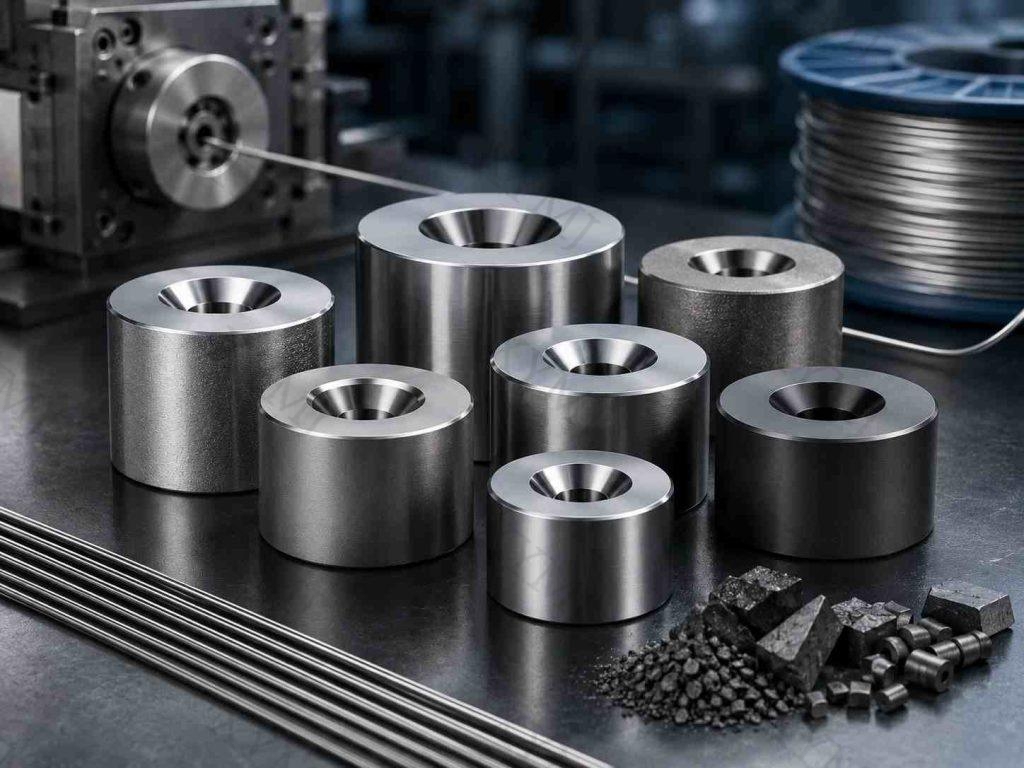
There are a few main material options on the market: natural diamond, polycrystalline diamond (PCD), and tungsten carbide. Diamond-based dies offer excellent performance for ultra-fine wire, but they’re expensive and limited in application range. Tungsten carbide, on the other hand, covers the widest range of wire types and production conditions, which is why it dominates industrial wire drawing globally.
But “tungsten carbide” isn’t one material but a family of grades. And picking the wrong one within that family is where many manufacturers quietly lose money.
The Properties That Actually Drive Performance
Before getting into specific grades, it helps to understand what makes one carbide different from another. There are four properties worth paying attention to:
Cobalt content (Co%) is the most important variable. Cobalt acts as the binder in tungsten carbide — more cobalt means better toughness and resistance to cracking, but lower hardness and faster wear. Less cobalt means harder material that resists abrasion, but becomes more brittle under impact.
Grain size refers to how fine or coarse the tungsten carbide particles are. Finer grains generally produce better surface finishes and higher hardness at the same cobalt level. Ultrafine grain grades have become increasingly popular for precision wire drawing.
Hardness (HRA or HV) directly affects wear resistance. Most wire drawing grades fall between HRA 85 and 92.
Transverse rupture strength measures how much load the material can take before fracturing, it’s critical for heavy-reduction passes or harder wire materials.
These four properties don’t operate independently. Increasing cobalt improves toughness but reduces hardness. Going finer on grain size improves wear resistance but requires tighter manufacturing control. Every grade is a trade-off, and the goal is finding the right balance for your specific application.
For reference on carbide classification standards, ISO 4499 covers hardmetal microstructure and grain size characterization, which forms the basis for most industrial specifications.
The Main Carbide Grades Used in Wire Drawing
The grades most commonly used in wire drawing dies fall into three groups based on cobalt content.
Low Cobalt Grades: 6–8% Co
Typical grades: YG6, YG6X, YG8
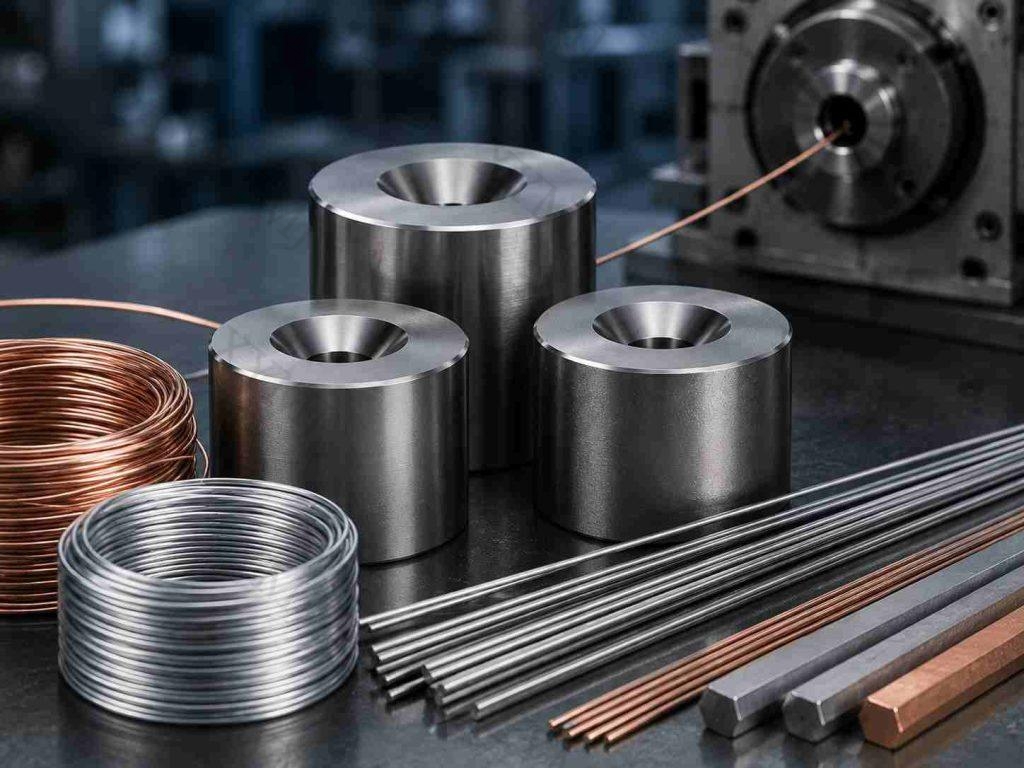
These are the hardest grades in the wire drawing category. With cobalt content between 6% and 8%, they offer high wear resistance and are well-suited for fine wire drawing at higher speeds. The lower cobalt content means less toughness, so these grades work best in stable, consistent drawing conditions, not where there’s a lot of impact or variation in wire quality.
Common applications: copper wire (fine gauges), aluminum wire, and other non-ferrous metals where surface finish matters.
Medium Cobalt Grades: 10–13% Co
Typical grades: YG10, YG11
This is the most widely used range for wire drawing. Medium cobalt grades strike a practical balance between hardness and toughness, which makes them reliable across a broader range of conditions. If a manufacturer had to pick just one grade for general-purpose use, it would likely fall here.
Common applications: steel wire, galvanized wire, medium-gauge copper wire, and most standard industrial wire drawing operations.
High Cobalt Grades: 15–25% Co
Typical grades: YG15, YG20, YG25
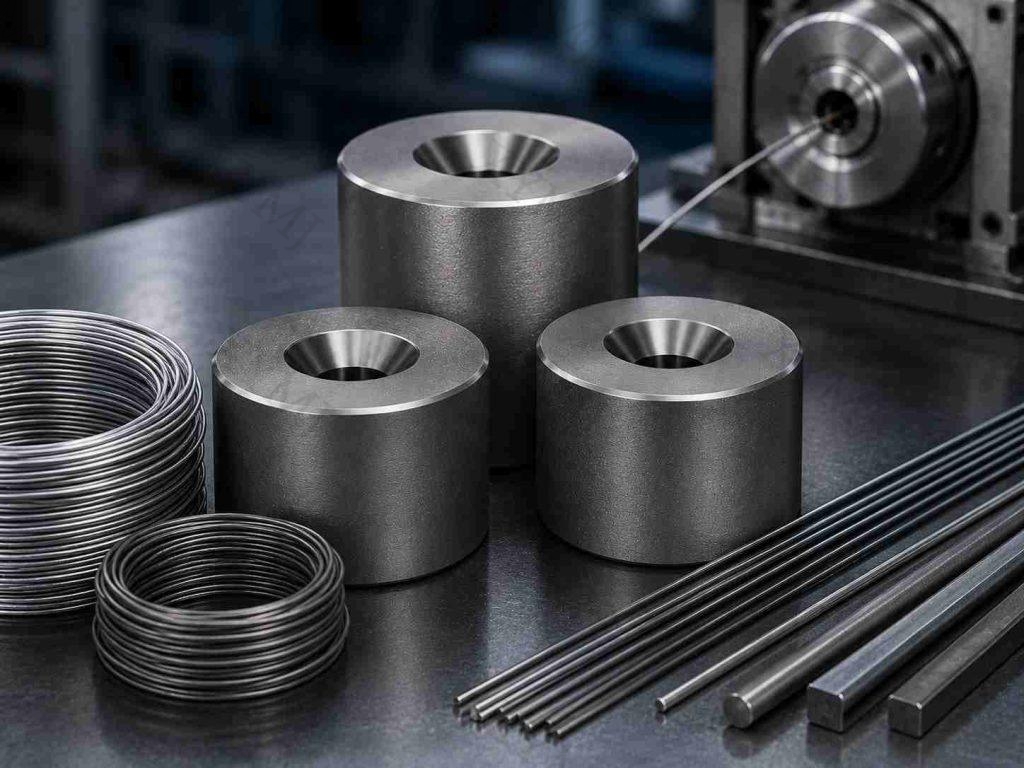
These grades prioritize toughness over hardness. With cobalt at 15% or above, the material can absorb significantly more impact before cracking which matters when drawing hard wire types or working with large reduction ratios. The trade-off is faster wear compared to lower-cobalt grades.
Common applications: stainless steel wire, spring steel, heavy-gauge wire, and any situation where die cracking is a recurring problem.
Fine and Ultrafine Grain Grades
This isn’t a separate cobalt category, it’s an additional variable within the grades above. At the same cobalt percentage, a fine-grain or ultrafine-grain grade will typically offer better wear resistance and a smoother die surface, which translates to better wire finish quality. These grades cost more to produce, but they’re increasingly specified for precision applications where surface quality is non-negotiable.
Matching Grade to Wire Type: A Practical Reference
Rather than working through every combination in text, here’s a straightforward reference table:
| Wire Material | Recommended Grade | Co% | Grain Size | Primary Reason |
| Copper (fine) | YG6 / YG6X | 6% | Fine | High wear resistance, surface quality |
| Copper (medium) | YG8 | 8% | Fine–Medium | Balanced hardness and die life |
| Aluminum | YG8 / YG10 | 8–10% | Fine | Low adhesion, smooth finish |
| Steel wire | YG10 / YG11 | 10–11% | Medium | Toughness handles steel abrasion |
| Galvanized wire | YG11 | 11% | Medium | Consistent performance, good die life |
| Stainless steel | YG15 | 15% | Medium | Impact resistance for harder material |
| Spring steel | YG20 | 20% | Medium–Coarse | High toughness, heavy reduction |
This table is a starting point, not an absolute rule. Real-world conditions often shift the ideal choice up or down by one grade.
Drawing Conditions Change the Equation
Wire type is only part of the picture. Two manufacturers drawing the same wire can end up needing different grades because their process conditions differ.
Drawing speed affects heat generation. Higher speeds create more friction heat, which can accelerate wear or cause thermal cracking. In high-speed operations, finer-grain grades with good thermal stability tend to hold up better.
Reduction ratio per pass is directly related to the stress on the die. Large reductions put more load on the die wall, which increases the risk of cracking with low-cobalt grades. If your passes are aggressive, moving to a medium or high cobalt grade often extends die life more than any other change.
Lubrication has a bigger impact than many expect. Dry drawing generates significantly more heat and contact stress than wet drawing. A grade that performs well in wet drawing might wear out faster or crack in dry conditions. This is a common source of frustration when comparing supplier recommendations across different operations.
Wire surface condition also matters. Wire with heavy oxide scale or inconsistent surface quality puts irregular stress on the die, which favors tougher (higher-cobalt) grades even if the wire material itself wouldn’t normally require them.
The International Tungsten Industry Association (ITIA) publishes technical data on tungsten carbide applications that can be useful if you need deeper background on material behavior under specific conditions.
What to Check When Sourcing Carbide Dies
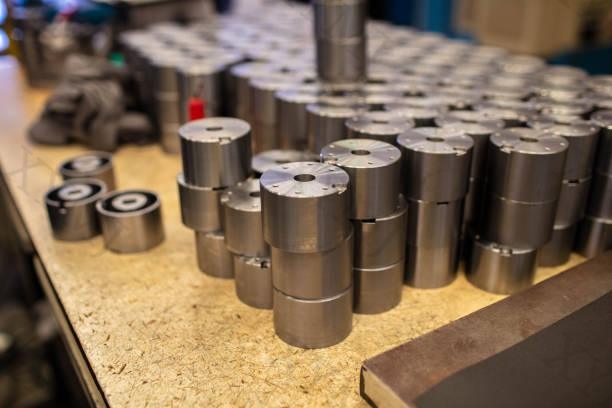
Even the right grade on paper won’t perform well if the material quality is inconsistent. A few things worth verifying:
Cobalt content verification. Ask for material certificates (COA) and, for critical applications, request XRF or EDS testing. Some lower-cost suppliers substitute grades without disclosure.
Grain uniformity. Inconsistent grain distribution leads to uneven wear and premature failure. Metallographic analysis can confirm this, though it’s not always practical for routine orders.
Hardness batch consistency. Hardness should be measured and recorded per batch. Significant variation within a batch is a red flag.
Supplier certifications. ISO 9001 certification doesn’t guarantee quality, but it does indicate a documented quality management system — a basic threshold worth requiring.
One pattern worth knowing: carbide dies that come in significantly below market price often have issues with porosity or composition inconsistency. These problems don’t always show up immediately, but they reduce die life and can affect wire surface quality over time.

If you’re seeing premature wear, consider dropping cobalt content (harder grade). If you’re seeing cracking or chipping, go the other direction. Most optimization problems in wire drawing dies come down to getting that balance right.
Need help selecting the right carbide grade for your specific application? Contact our technical team, we’re happy to review your process parameters and make a recommendation.
Common Questions
What is the most common carbide grade for wire drawing?
YG8 and YG10 cover the largest share of applications. YG8 is popular for non-ferrous wire; YG10 and YG11 are standard for steel wire.
Is YG8 or YG11 better for steel wire?
Generally YG11. Steel wire creates more abrasion and impact than non-ferrous wire, and the additional cobalt in YG11 provides better toughness. YG8 tends to wear faster or chip under sustained steel drawing.
How does cobalt content affect die life?
Higher cobalt improves resistance to cracking and chipping (longer life in tough conditions) but reduces hardness (faster surface wear in abrasive conditions). Optimizing die life means matching cobalt content to the dominant wear mechanism in your process.
Can you use the same grade for copper and steel wire?
Technically possible with a medium-cobalt grade, but not ideal. Copper wire benefits from harder, lower-cobalt grades for better wear resistance and surface finish. Steel wire needs more toughness. Using one grade as a compromise means neither application is optimized.
Related Products


