
What Is the Best Tungsten Carbide Grade for Stainless Steel?
If you’ve ever run a carbide insert on stainless steel and watched it dull in minutes, you already know the problem. Stainless steel is not just another hard metal, it actively fights back. It work-hardens as you cut, it generates heat that has nowhere to go, and it tends to stick to the cutting edge in a way most other materials don’t.
The good news is that the right carbide grade makes a measurable difference. The wrong one just costs you inserts and time.
This guide breaks down exactly which grades work, why they work, and how to match them to the specific type of stainless steel you’re machining.
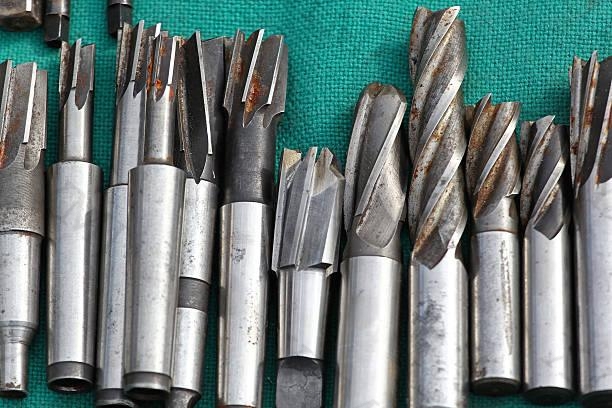
Why Stainless Steel Is Harder to Machine Than It Looks
Most stainless steels don’t rank as the hardest materials on paper. A standard 304 stainless sits around 200 HB, which is softer than many tool steels. So why does it wear down tooling so fast?
Three reasons:
Work hardening. When you cut stainless, the material ahead of the cutting edge deforms and hardens almost instantly. If your feed rate is too low or you let the tool rub instead of cut, you’re not machining the original material anymore, you’re machining a harder version of it.
Low thermal conductivity. Stainless steel holds heat rather than transferring it. That heat concentrates at the tool tip, which accelerates wear and can cause the binder in the carbide to break down faster than expected.
Built-up edge (BUE). Stainless steel has a tendency to weld itself microscopically to the cutting edge. This is called built-up edge, and it distorts the geometry of the insert, leading to poor surface finish and unpredictable tool life.
None of these problems are unsolvable but they do mean you need a grade that was designed with these conditions in mind.
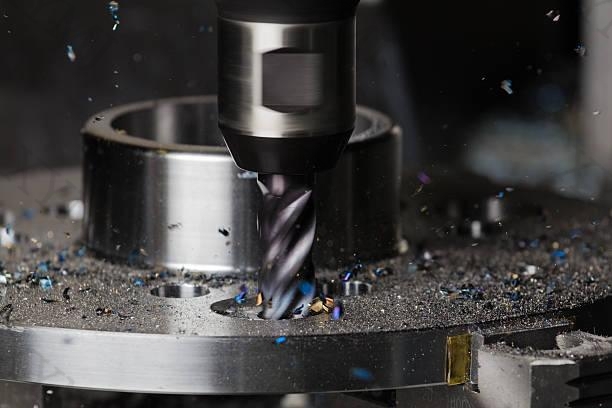
Understanding Carbide Grades: What the Letters Actually Mean
Before getting into specific recommendations, it helps to understand the ISO 513 classification system, which is the standard framework most insert manufacturers use.
The system divides carbide grades into application groups based on what material they’re designed to cut:
- P grades — for long-chipping steels and cast iron
- M grades — for stainless steel, heat-resistant alloys, and difficult-to-cut materials
- K grades — for short-chipping materials like grey cast iron
- N grades — for non-ferrous metals (aluminum, copper)
- S grades — for superalloys and titanium
- H grades — for hardened steels
For stainless steel, M grades are the starting point. They’re formulated to handle the combination of heat, adhesion, and work hardening that comes with cutting austenitic and duplex stainless steels. The number after the letter (e.g., M20, M25) indicates the position on a toughness-to-hardness scale — lower numbers are harder and more wear-resistant, higher numbers are tougher and better for interrupted cuts.
Beyond the ISO group, two other factors heavily influence performance:
Cobalt (Co) content — Cobalt is the binder that holds the tungsten carbide grains together. Higher Co content increases toughness but reduces hardness. For stainless steel, a range of 6–10% Co is generally the right balance. Go too high and the grade softens under heat; go too low and it becomes brittle under the mechanical shock that stainless machining often produces.
Coating — Most modern inserts are coated, and the coating matters. TiAlN (titanium aluminum nitride) performs well in the high-heat environment of stainless machining. AlCrN offers even better oxidation resistance for higher cutting speeds. Both outperform uncoated grades in most stainless applications. TiCN is better suited to lower-temperature operations where abrasion is the primary wear mechanism.
The Best Carbide Grades by Stainless Steel Type
Here’s where the specifics matter. Not all stainless steel is the same, and the grade that excels on 304 may underperform on 2205 duplex.
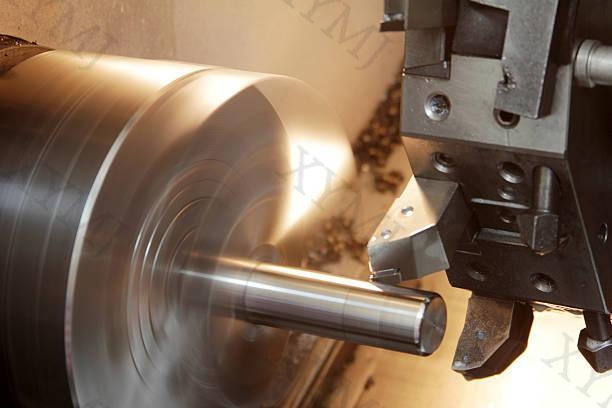
Austenitic Stainless Steel (304, 316, 316L)
This is the most commonly machined family and the one that creates the most BUE issues. For turning, M20 to M30 grades deliver consistent results. Sandvik Coromant’s GC2220 is widely referenced for 316 stainless in finishing to medium operations. Kennametal’s KC5010 performs similarly and handles the adhesion tendency well due to its smooth, dense coating layer.
For higher-speed operations or where surface finish matters, look at Seco’s TP2501, it carries a TiAlN-based coating that maintains its edge integrity longer in the thermal cycling typical of stainless.
Recommended starting parameters for 304/316 turning:
- Cutting speed (Vc): 150–220 m/min
- Feed rate (fn): 0.15–0.25 mm/rev
- Depth of cut (ap): 1.5–3.0 mm
Martensitic and Ferritic Stainless Steel (410, 416, 430)
These grades are closer in behavior to carbon steel. They work-harden less aggressively than austenitic types, which means a P20 to M20 grade often works well. Mitsubishi’s VP15TF is a reliable choice here, its PVD coating and fine-grain substrate handle the moderate heat and abrasion these alloys generate.
Because 416 is a free-machining stainless (sulfur-added for machinability), it’s significantly less demanding on tooling. A standard P25 grade can perform adequately, though M-grade still provides a margin of safety.
Duplex Stainless Steel (2205, 2507)
Duplex alloys combine austenitic and ferritic microstructures, giving them higher strength than standard 304 or 316. That means higher cutting forces and more heat at the edge. An M15 to M25 grade with a high-alumina PVD coating is the typical recommendation. Tungaloy’s T9115 has been documented in several production environments for duplex components and shows good resistance to notch wear, which is a common failure mode on duplex.
Cutting speeds for duplex should be kept conservative around 120–160 m/min for turning to avoid thermal shock to the insert.
Super Austenitic and High-Alloy Stainless (904L, 254 SMO)
These materials behave closer to nickel superalloys than conventional stainless. At this level, S-grade or fine-grain M10 grades are appropriate. The priority shifts from wear resistance to toughness and edge stability, since these alloys can cause unpredictable mechanical loading on the insert.
For a current technical reference on ISO grade classifications and their intended application ranges, ISO 513:2022 is the authoritative document.
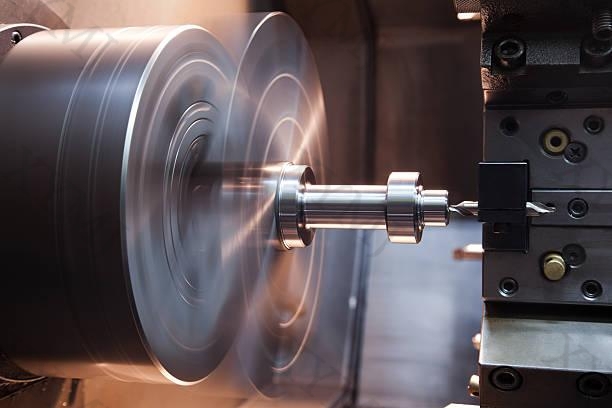
Practical Tips That Actually Affect Tool Life
Selecting the right grade is half the equation. How you run it determines whether you get the performance the manufacturer’s catalog promises.
Don’t let the tool rub. With stainless, any hesitation or dwelling in the cut triggers work hardening. This means your entry angle, feed rate, and spindle engagement all need to be consistent. A tool path that pauses or retracts into the cut on an already-hardened surface will wear the edge faster than normal cutting.
Use coolant properly. For stainless steel, high-pressure coolant directed at the cutting zone helps control temperature and flushes chips away before they re-cut. Dry machining on stainless is possible in specific conditions but generally shortens tool life. Emulsion concentrations in the 8–12% range are standard for most stainless turning operations.
Watch for BUE before it becomes a problem. Built-up edge doesn’t always cause visible damage immediately. It shows up first as a deteriorating surface finish, the Ra reading climbs, and the machined surface may develop a slightly smeared or streaked appearance. If you’re seeing this, the issue is usually cutting speed (too low) or coating wear, not feed rate.
Match geometry to the application. Grade selection and insert geometry work together. A sharp positive rake geometry reduces cutting forces and minimizes the tendency for stainless to stick to the edge.
Common Mistakes Worth Avoiding
Using K-grade inserts on stainless. K grades are optimized for cast iron, which produces short, brittle chips. Stainless produces long, tough chips with very different thermal properties. K-grade carbide tends to show rapid crater wear on stainless.
Assuming more cobalt is always better. Higher cobalt does increase toughness, but in high-heat applications like stainless turning, it can accelerate diffusion wear, where the binder literally dissolves into the workpiece material at elevated temperatures. Staying in the 6–10% Co range is usually the right balance.
Overlooking tool overhang. Even the best carbide grade performs poorly if the insert is vibrating. Stainless steel is sensitive to chatter, which accelerates edge chipping. Keep tool overhang to less than 3× the tool diameter where possible.
FAQ
What carbide grade works best for 316 stainless steel?
M20–M30 grades with a TiAlN or AlCrN PVD coating are the standard recommendation. Sandvik GC2220 and Kennametal KC5010 are frequently cited for 316 in production environments.
Can I use one grade for all stainless steel types?
An M25 grade covers a wide range, but you’ll leave performance on the table compared to a grade matched to the specific alloy. For production work, selecting by stainless family is worth the effort.
Is coated or uncoated carbide better for stainless?
Coated grades outperform uncoated in almost every stainless steel application. The coating reduces friction, limits BUE formation, and acts as a thermal barrier. Uncoated grades are mainly used for very low-speed finishing or when the coating itself causes adhesion issues which is rare with modern coating technology.
How often should inserts be changed when machining stainless?
This depends heavily on the alloy, parameters, and grade. A practical rule: change inserts based on surface finish or flank wear measurements (0.3 mm VB is a common threshold), not purely on cycle count. Stainless tool life is less predictable than mild steel, so visual monitoring matters.