
Tungsten Carbide Composition: How Does It Affect Parts Performance?
In modern manufacturing, Tungsten Carbide is hailed as the “teeth of industry.” Whether in precision CNC machining, mining exploration, or high-pressure dies, this material holds a central position due to its extreme hardness and superior wear resistance.
But have you ever wondered what exactly dictates the exceptional performance of tungsten carbide? The answer lies in its precise chemical composition.
Today, we will take an in-depth look at the tungsten carbide composition, the critical role of the binder, and how to select the appropriate industrial grade based on its composition.
What is Chemical Composition of Tungsten Carbide?
Tungsten Carbide (commonly referred to as Cemented Carbide) is not a simple monolithic metal; rather, it is a Metal Matrix Composite (MMC). It is primarily composed of extremely hard ceramic particles (Tungsten Carbide) held together by a ductile metallic binder (typically Cobalt).
Core Components of Tungsten Carbide
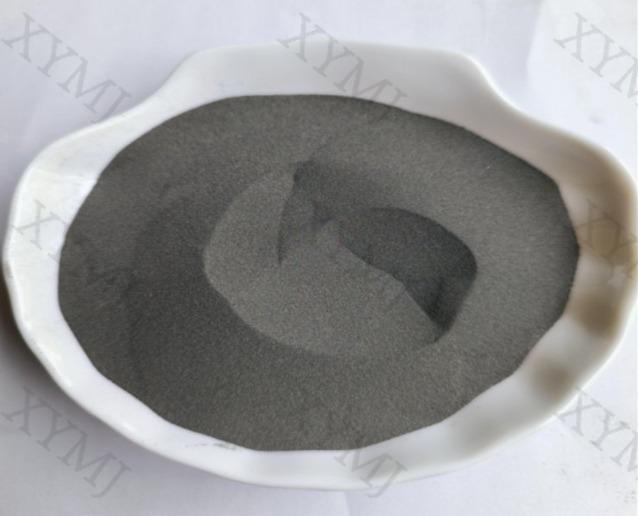
Hard Phase: Tungsten Carbide Powder (WC)
This is the primary load-bearing component. It provides the vast majority of the material’s hardness and wear resistance.
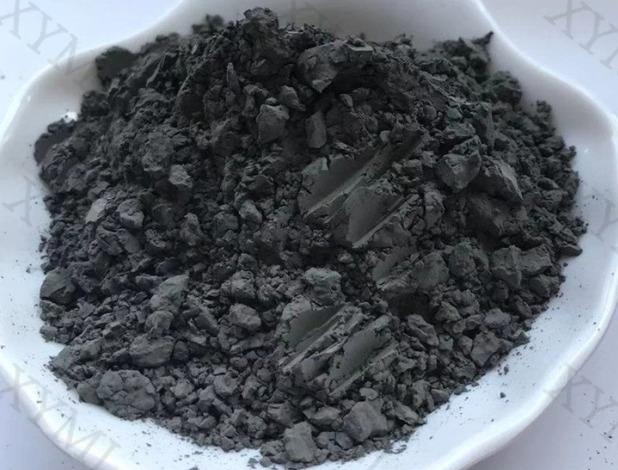
Binder Phase: Cobalt (Co), Nickel (Ni), or Chromium (Cr)
The binder acts as the “glue” that coats and binds the hard particles together, providing the material with the toughness needed to resist impacts.
Influence of Tungsten Carbide Key Components on Performance
The performance of tungsten carbide is not static; its most remarkable feature is that material properties can be “tailored” by precisely adjusting composition ratios and microstructure to meet diverse needs, from micro-surgical blades to heavy-duty mining drills.
1. The Balancing Act of Cobalt Content
As a binder, cobalt acts as a cushion and support between the hard particles. Adjusting the cobalt percentage is the most direct way to alter material properties:
Low Cobalt (3% – 6%): Pursuing Extreme Hardness
In this ratio, tungsten carbide particles are packed tightly. The material exhibits extreme hardness and excellent red hardness (the ability to maintain hardness at high temperatures). However, due to the lack of sufficient binder phase for cushioning, it is relatively brittle and prone to chipping.
Typical Applications: Continuous high-speed cutting, cast iron machining, and finishing of high-precision parts.
High Cobalt (10% – 25%): Pursuing Impact Toughness
The thicker layer of cobalt acts as a protective layer around the hard grains, effectively absorbing external impact energy and stopping any further cracks from developing. Although there is a decrease in hardness, there is a significant increase in transverse rupture strength and impact resistance.
Typical Applications: Rock drilling tools, oil well bits, and heavy-duty cold heading dies subjected to massive pressure.
2. The Microscopic Magic of Grain Size
Beyond chemical composition, the physical particle size of the Tungsten Carbide (WC) powder, known as grain size, has a “butterfly effect” on performance:
Sub-micron / Nano-grade Grains:
The finer the grains, the larger the total contact area between particles, requiring a thinner and more uniform binder distribution. This maintains high hardness while significantly boosting the material’s Transverse Rupture Strength (TRS).
Advantage: Extremely sharp and wear-resistant edges.
Typical Applications: PCB micro-drills (as small as 0.1mm), solid carbide end mills, and precision electronic molds.
Coarse Grain:
Larger WC particles offer better thermal fatigue resistance and higher resistance to thermal cracking. In environments with extreme pressure and severe frictional heat, coarse-grained structures are more stable than fine-grained ones.
Advantage: Less prone to fatigue cracking under heavy loads.
Typical Applications: Tunnel Boring Machine (TBM) cutters, coal mining teeth, and large-scale stamping dies.
| Structural Feature | Microscopic Description | Key Advantage | Trade-off / Weakness |
| Low Cobalt + Fine Grain | Extremely small, tightly packed particles with very thin binder layers. | Maximum Hardness & Sharpness. Superior wear resistance. | High brittleness; prone to chipping or fracturing under impact. |
| High Cobalt + Coarse Grain | Large WC particles encapsulated by thick layers of metallic binder. | Extreme Toughness. Capable of withstanding heavy impact and thermal shock. | Lower hardness; wears down faster in high-abrasion environments. |
| Ultra-Fine Grain (at equal hardness) | More binder space available compared to standard grains at the same hardness level. | Balanced Strength & Hardness. Offers both wear resistance and fracture toughness. | Complex manufacturing process and higher production costs. |
Alloy Additives: The “Catalysts” of Performance
Apart from the major characters, Tungsten Carbide and Cobalt, cemented carbide also has other carbides in small quantities. Even though these have a small weight composition of 0.5% to 5%, they function like “seasoning” that changes the composition of the material in such a way that it can withstand the most adverse industrial conditions.
1. Anti-Cratering Agents: Titanium Carbide (TiC) & Tantalum Carbide (TaC)
The temperature on the cutting edge of a steel cutting tool can increase to more than 1000 ∘C. At such high temperatures, chips can “weld” onto the cutting tool’s surface or react chemically, resulting in rapid crater wear on the rake face of the cutting tool.
Mechanism of Action:
TiC: Increases red hardness of the alloy along with its oxidation resistance. The coefficient of friction is also decreased.
TaC: Improves the melting point of the alloy and hence significantly enhances its high-temperature strength and resistance to plastic deformation.
Applications: Used in cutting inserts for steel machining (ISO P-class carbides), which are required to prevent deformation of the cutting edge due to high cutting temperatures.
2. Grain Growth Inhibitors: Chromium Carbide (Cr3C2) & Vanadium Carbide (VC)
During the production of sub-micron and nano-grade cemented carbide materials, the major problem is Abnormal Grain Growth (AGG) of the material during high-temperature sintering processing, which leads to a weakened microstructure of the material.
Mechanism of Action: The additive particles adsorb on the surface of WC grains and act as a fence around the WC grains.
Key Effects: Cr3C2 not only inhibits grain growth but also improves significantly the material’s resistance to corrosion.
Applications: High-precision micro-tools, corrosion-resistant seal rings, and all industrial grades in which a perfectly uniform microstructure is a necessity.
The actual formula for the mix of additives is frequently a closely guarded commercial secret (Know-how). Even if the basic chemical composition looks the same on the data sheet, huge discrepancies in tool life can arise because of different formulas for the additives.
Comparison Table of Common Carbide Grades
In order to help you make an exact choice for your particular application, the following table shows the composition ratios and physical properties in relation to general scenarios based on the ISO standards:
| Grade (ISO) | Core Composition (Approx. %) | Physical Properties | Typical Applications |
| K10 / K20 (Finishing Grade) | WC: 94% / Co: 6% (Fine Grain) | High Hardness (91-92.5 HRA). Excellent wear resistance and edge sharpness; lower impact resistance. | Precision machining of cast iron, aluminum alloys, and non-ferrous metals; woodworking tools. |
| P20 / P30 (Steel Grade) | WC: 80-85% / Co: 8-12% (Contains TiC/TaC) | Medium Hardness (89-90.5 HRA). Superior resistance to crater wear and thermal deformation. | Medium to high-speed cutting of carbon steels and stainless steels; prevents chip welding. |
| M10 / M20 (Universal Grade) | WC: 88-90% / Co: 8-10% (Contains trace TaC) | Balanced Performance. Balances hardness and toughness; highly versatile. | Machining of stainless steel, superalloys, and titanium alloys; stable under interrupted cutting conditions. |
| G30 / G40 (Mining/Die Grade) | WC: 75-80% / Co: 20-25% (Coarse Grain) | Extreme Toughness (81-83 HRA). High transverse rupture strength; survives heavy mechanical impact. | Mining rock drills, heavy-duty cold heading dies, fastener forming, and seals under high pressure. |
How to Select the Right Tungsten Carbide Composition?
In industrial procurement and design, choosing the right tungsten carbide is not a matter of “the more expensive, the better” or “the harder, the better.” A successful material selection strategy requires a precise balance between performance and service life. You should evaluate your choice based on these three core dimensions:
1. Wear Type: Friction vs. Erosion?
The first step is to identify the primary cause of material failure.
Pure Wear Resistance Requirements: If the operating conditions involve high-speed cutting or continuous sliding friction (such as wire drawing dies or precision valve seats) without significant impact pressure, prioritize “Low Cobalt + Fine/Ultra-Fine Grain.”
Logic: Minimize the proportion of the soft binder (Cobalt) and increase the density of hard particles to resist surface abrasive wear.
Chipping Resistance Requirements: For interrupted cutting or machining castings with a hard “skin,” the cobalt content should be moderately increased to prevent edge failure.
2. Impact Load: Static Pressure vs. Dynamic Shock?
This is the critical factor in determining whether the material will fracture or shatter.
Heavy Impact/High Pressure: For applications like rock drilling, rotary piling teeth, or cold heading dies for large bolts, the material must be able to “deform without breaking.” In these cases, “High Cobalt (15% – 25%) + Coarse Grain” is essential.
In-depth Analysis: A coarse-grained structure effectively lengthens the crack propagation path, while a high percentage of cobalt acts like a vehicle’s “suspension system,” absorbing impact energy.
Stable Loads: For high-precision stamping dies, a medium cobalt content (10% – 12%) is often selected to maintain dimensional stability and prevent deformation.

3. Chemical Environment: Oxidation, Corrosion, and Magnetic Requirements
The chemical properties of the binder are often the overlooked “Achilles’ heel” of carbide tools.
Corrosion Resistance: Traditional cobalt-based carbides can suffer from “leaching” (binder depletion) in acidic or certain strong alkaline environments. Once the binder is corroded away, the hard particles fall out, leading to rapid failure.
The Solution: For chemical pump valves or food processing blades, switch to a Nickel (Ni) base or Chromium (Cr) additives. Nickel-based alloys offer excellent corrosion resistance and significantly longer life in humid or corrosive environments.
Non-Magnetic Requirements: Assembly tools for certain precision electronic devices require materials to be non-magnetic.
The Solution: Pure cobalt is magnetic. If a non-magnetic environment is required, specific Nickel-bound carbides must be selected, as nickel can be formulated to be paramagnetic or non-magnetic.
XYMJ: Professional Tungsten Carbide Components Manufacturer
The compositional design of tungsten carbide is a precise art of balance. By fine-tuning the ratio of tungsten carbide (WC) to binder, we create industrial marvels that are as hard as diamond, yet tough enough to withstand heavy impacts.
With our long-term presence in the field of materials science, XYMJ, as a specialized manufacturer of tungsten carbide, can not only provide standard materials but also help to design and manufacture specialized custom-made carbide parts according to your specific working needs. If you need extremely impact-resistant or durable materials in harsh corrosive environments. From the design and creation of specialized chemical formulations to the machining of finished components, XYMJ offers a one-stop solution to meet all your tungsten carbide requirements in precision machining or mining.
Related Products


