
Can Tungsten Carbide Blades Be Sharpened?
In industrial cutting, packaging, metalworking, and woodworking industries, tungsten carbide blades are widely used due to their extremely high hardness and wear resistance. However, many companies encounter a key question during use:
Can tungsten carbide blades be sharpened?
This article will provide a comprehensive, industry-level explanation from multiple perspectives, including material properties, grinding processes, cost analysis, and alternative solutions.
Part 1. What are Tungsten Carbide Blades?
Tungsten carbide blades are industrial cutting tools made primarily from tungsten carbide (WC) as the hard phase and cobalt (Co) as the metallic binder, making them a typical cemented carbide product. Due to their excellent hardness and wear resistance, they are widely used in high-intensity and high-precision cutting and machining applications.
Structurally, tungsten carbide blades are not traditional “steel.” Instead, they are produced through a powder metallurgy process, in which tungsten carbide particles are combined with cobalt and sintered together. The tungsten carbide provides extremely high hardness and wear resistance, while the cobalt acts as a binder that improves toughness, allowing the blade to maintain sharp cutting performance while also offering a certain level of impact resistance.

Part 2. Can Tungsten Carbide Blades Be Resharpened?
Simple Answer: Yes, but with limitations
It is possible to regrind and resharpen tungsten carbide blades, although this is not endless and is not applicable in all cases of wear. In practical use, it is based on the degree of wear and the presence of enough material for efficient sharpening. The usual tool for this purpose is a diamond grinding wheel.
Why Can They Be Resharpened?
Despite its exceptional hardness, tungsten carbide is also subject to machining by dedicated devices. These usually include diamond grinding wheels used in industrial environments, highly precise CNC grinders, and sophisticated angle controls.
Why is Resharpening Limited?
There are several key limitations to resharpening tungsten carbide blades. To begin with, due to the extremely high hardness of the material, the cost of processing is increased. Secondly, tungsten carbide has a relatively high brittleness, which leads to an increase in the probability of chipping of the blade edges during sharpening. Thirdly, with each resharpening, the blade is made smaller, which decreases its working life. And fourthly, the geometry of the blade edge may be changed with each resharpening operation.
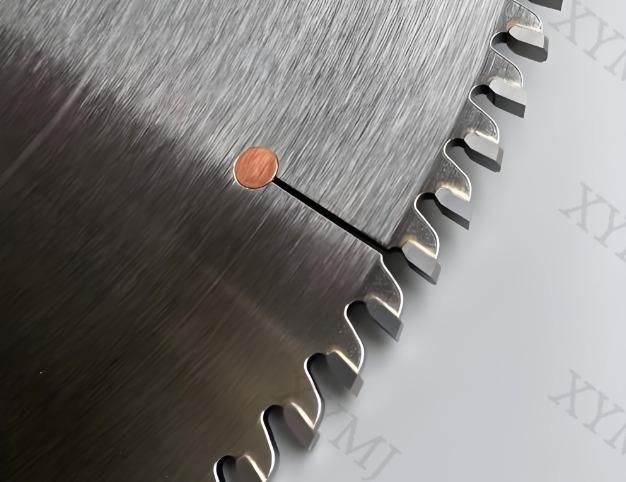
Part 3. What Is the Grinding Process for Tungsten Carbide Blades?
The resharpening of tungsten carbide blades is a high-precision machining process that requires specialized equipment, abrasive materials, and experienced operators. In industrial practice, a standardized workflow is used to restore cutting performance while minimizing structural damage to the blade.
3.1 Common Grinding Methods
Because of the extreme hardness of tungsten carbide, conventional grinding wheels cannot be used. Instead, diamond-based tools are required. Common methods include diamond wheel precision grinding (the most widely used method for high-accuracy restoration), CNC tool grinder machining (which ensures stable angle control and batch processing capability), and surface grinding (used to restore reference or flat surfaces). After grinding, polishing and edge finishing are often applied to improve edge smoothness and remove micro burrs.
3.2 Standard Processing Workflow
The grinding process typically follows a strict sequence. First, a preliminary inspection is conducted to assess wear conditions and check for edge damage such as chipping. Next, the required resharpening angle and material removal amount are determined based on application requirements. The blade then undergoes coarse grinding using diamond wheels to restore the basic edge shape, followed by fine grinding to achieve higher precision and sharpness. After machining, a final inspection is performed to check dimensions, edge condition, and possible micro-cracks. Finally, surface treatment and protection are applied to extend service life.
3.3 Key Quality Control Points
Checking the quality after the grinding process is very important to help recover the performance. Some of the aspects that should be checked include sharpness of the edge, presence of micro-cracks or edge chipping, dimensions that fall within the tolerable range, and consistency in the cutting angle compared to the standard designs. This will determine the efficiency in cutting.
Part 4. How Many Times Can Tungsten Carbide Blades Be Resharpened?
There is no fixed number for how many times tungsten carbide blades can be resharpened. It mainly depends on factors such as blade structure design, wear condition, and the amount of material removed during each grinding process. In industrial practice, the decision is based on whether the blade still has enough “material allowance” for further regrinding.
4.1 Blade Thickness and Structural Design
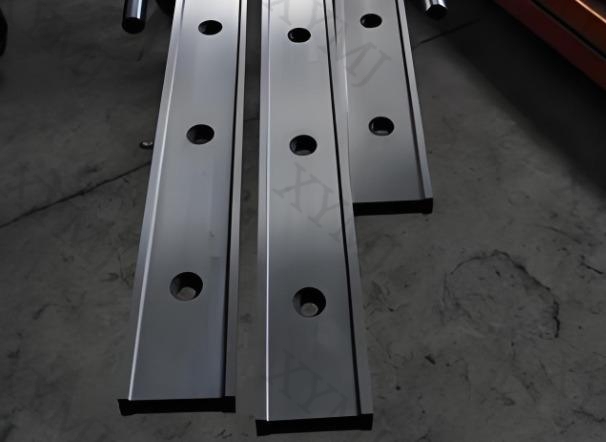
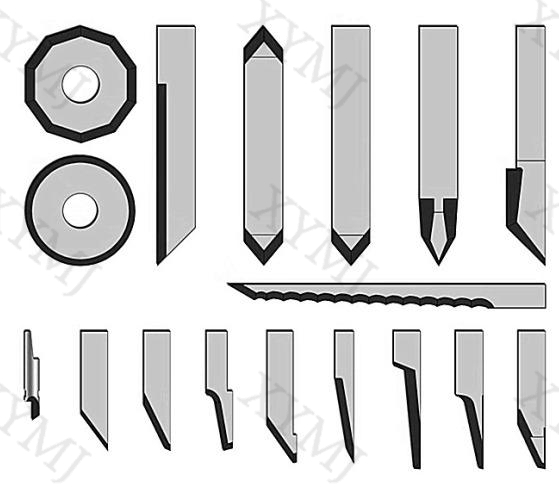
Blade thickness and structure are important aspects determining the blade’s ability to be re-sharpened. As a rule, the blades which are thicker possess greater material reserves and will withstand a higher number of grinding procedures. At the same time, blades which are thinner will get to their limits faster and may provide only one or two chances for being sharpened. Moreover, various types of blades, such as single-edged, double-edged, and special shapes of blades, will influence the possibility of their resharpening as well.
4.2 Blade Condition at the Beginning
The state of damage will also have an effect on the opportunity to restore a blade’s sharpness. Blades damaged minimally will be able to be restored several times by means of precision grinding. On the contrary, if the blade is significantly damaged and shows traces of breakage or crack, then it cannot be considered for re-sharpening because of its condition.
4.3 Material Loss per Grinding Cycle
Each resharpening process inevitably removes a certain amount of material from the blade. Therefore, blade life is essentially a gradual consumption process, which can be understood as:
Blade life = Initial dimensions − cumulative material loss from repeated grinding
As the number of resharpening cycles increases, the blade size gradually decreases until it reaches the minimum usable limit for installation or cutting performance.
4.4 General Industrial Experience Range
In practice, depending on the work environment, blade thickness, and degree of precision, tungsten carbide blades can usually be resharpened around 1 to 5 times. In the case of precision cutting or high-speed cutting operations, the permissible times are generally less, whereas in normal cutting operations, the permissible times are a little more.
Part 5. When Is It Not Recommended to Resharpen Tungsten Carbide Blades?
Although resharpening tungsten carbide blades can help reduce costs, it is not always the most economical or suitable option. In some cases, resharpening may negatively affect performance or fail to provide sufficient value.
5.1 Severe Edge Chipping or Structural Damage
When a blade has large-area chipping, deep edge damage, or localized fractures, its internal structure is often already compromised. In such cases, even after grinding, it is difficult to fully restore the original cutting performance and stability. Therefore, resharpening is usually not cost-effective and may pose operational risks.
5.2 High-Precision Application Requirements
In industries that demand extremely high precision, such as medical device manufacturing, high-end electronic component cutting, or precision die-cutting, strict requirements are placed on edge geometry and dimensional consistency. Even minor changes caused by resharpening can affect product quality. For these applications, using new blades is generally preferred to ensure consistent performance.
5.3 Excessively High Resharpening Cost
Economic factors must also be considered in real production environments. If the total cost of resharpening, including grinding fees, transportation, and machine downtime, approaches or even exceeds the price of a new blade, then resharpening is no longer cost-effective. In such cases, replacing the blade is usually the more practical and efficient choice.
Part 6. Regrinding vs Replacement: Which Is More Cost-Effective?
When used in an industry, the decision to either resharpen or replace tungsten carbide blades cannot be made based on their purchase price only. One needs to consider many parameters like cost-effectiveness, performance, and other economic factors.
6.1 Comparing the Cost Effectiveness
From the point of view of a single process, resharpening will prove to be cheaper since it implies the payment for the service only, which means lower costs. However, the blade is subject to a certain number of resharpenings, with each cycle lowering its effectiveness. Replacing the blade will require initial spending, yet it gives access to the entire life cycle of the blade.
6.2 Comparing the Performance
If we compare blade performance, then it is clear that a new blade will be able to deliver 100 percent of its capacity and will ensure precise and consistent results. Resharpening will allow restoring its capabilities up to 70–95 percent, which may not be sufficient in high-precision applications.
6.3 Downtime and Production Efficiency Considerations
In automated or continuous production environments, downtime often costs more than the cutting tools themselves. Any interruption caused by blade replacement or resharpening may lead to significant production losses. Therefore, companies must consider not only tool cost but also overall production efficiency, delivery schedules, and downtime risks when making decisions, choosing the option that minimizes total operational cost.
Part 7. How to Extend the Service Life of Tungsten Carbide Blades
In industrial applications, the service life of tungsten carbide blades can be significantly extended through proper usage and process optimization. This helps reduce resharpening frequency and replacement costs, ultimately lowering overall production expenses.
7.1 Optimize Operating Conditions
Blade performance is highly affected by working conditions. It is important to avoid overload cutting or machining materials that exceed the blade’s capacity. Maintaining a stable and consistent feed rate helps reduce sudden impact loads on the cutting edge. In addition, avoiding intermittent impacts or irregular cutting conditions can effectively reduce edge chipping and wear.
7.2 Material and Structural Optimization
During selection or design, choosing higher-grade tungsten carbide materials can improve overall wear resistance. At the same time, optimizing blade geometry, such as rake angle, clearance angle, and edge design, can reduce cutting resistance and improve stability, thereby extending tool life.
7.3 Surface Coating Technology
Surface coating is also an efficient method for improving blade durability. Popular surface coatings such as TiN (Titanium Nitride) and TiAlN (Titanium Aluminum Nitride) can greatly increase hardness and minimize friction and oxidation at high temperatures.
7.4 Choose a High-Quality Manufacturer
The fundamental factor affecting blade lifespan is manufacturing quality. This includes material composition, powder metallurgy sintering processes, and precision machining capabilities. As a professional tungsten carbide parts manufacturer, companies with high-standard production systems can significantly improve product consistency and durability, reducing long-term maintenance and replacement costs from the source.
XYMJ Tungsten Carbide Blades Supplier
As a professional tungsten carbide blades supplier, XYMJ specializes in the design, manufacturing, and customization of high-performance carbide cutting solutions for global industrial applications.
XYMJ focuses on delivering precision-engineered tungsten carbide components that meet strict requirements in durability, wear resistance, and cutting stability. With advanced production equipment and strict quality control systems, we ensure every blade maintains consistent performance in demanding industrial environments.
Our Core Strengths
- High-quality tungsten carbide raw material selection
- Advanced CNC precision grinding technology
- Strong capability in OEM & ODM customization
- Strict dimensional and hardness quality inspection
- Stable mass production capability for global B2B customers
XYMJ specializes in the longevity of tool performance and cost-efficient optimization instead of supplying regular goods. Their engineers closely work with customers to develop customized carbide blade solutions that maximize serviceable life and decrease overall maintenance costs.
Whether it is standard carbide blades or fully customized industrial cutting solutions, XYMJ provides support with dependability from design to production.

Related Products


