
Tungsten Carbide Coating: How It Works and Why It Matters
In modern industrial manufacturing and machining, choosing the right material is a make-or-break decision for any project. Your choice of material directly dictates product lifespan, machining efficiency, and overall cost control. Among the vast array of engineering materials, Tungsten Carbide and Tool Steel are the two most frequently compared.
While both are indispensable, “hardcore” materials in the industrial world, their physical properties are worlds apart. Tungsten Carbide is renowned for its unrivaled hardness, whereas Tool Steel is celebrated for its exceptional toughness. In this post, we will deliver an in-depth comparison of tungsten carbide vs tool steel across dimensions such as hardness, toughness, wear resistance, and cost to help you make the smartest choice for your next project.
Table of Contents
In modern heavy industrial manufacturing, mechanical components are constantly challenged by extreme operating conditions, high-intensity wear, severe erosion, and highly corrosive environments. How to extend the service life of these core components and reduce downtime maintenance costs is an eternal challenge for engineers.
As the “industrial armor” of surface engineering technology, tungsten carbide coating has become the premier surface strengthening solution for the global manufacturing industry, thanks to its near-diamond hardness and exceptional wear resistance. This article will provide you with a comprehensive and deep analysis of the principles, processing technologies, core advantages, and industrial applications of tungsten carbide coatings.
What is Tungsten Carbide Coating?
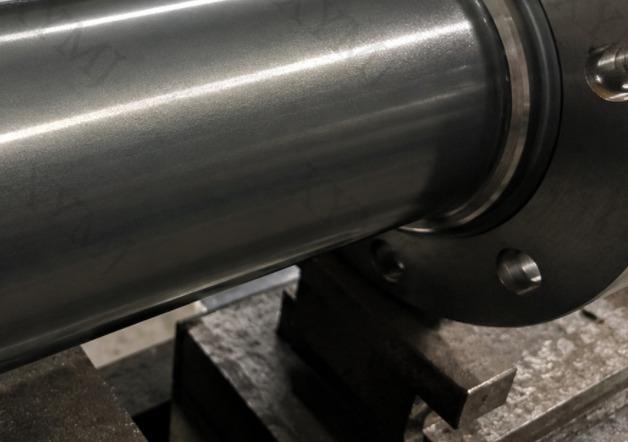
Tungsten Carbide Coating is a method of strengthening the surface through applying tungsten carbide substances to the surface of the metal substrate through thermal spraying techniques.
In itself, the tungsten carbide is one of the hardest substances, coming close to that of natural diamond. It is therefore extensively used in the production of hard wearing parts.
From a microstructural perspective, this coating primarily consists of two components:
Hard Phase: Micron-sized tungsten carbide (WC) particles, which are responsible for providing exceptional hardness and wear resistance.
Binder Matrix: Typically composed of cobalt (Co), nickel (Ni), or chromium (Cr). The binder metal acts like a “glue,” tightly encapsulating and firmly bonding the hard, brittle tungsten carbide particles. This imparts the necessary toughness and impact resistance to the coating.
Common Material Formulations of Tungsten Carbide Coating
Depending on the specific operating conditions, various material formulations have been developed for industrial use. The most common include:
| Formulation | Composition | Key Characteristics & Applications |
| WC-Co | Tungsten Carbide – Cobalt | Offers extremely high hardness and pure wear protection; ideal for dry environments. |
| WC-Co-Cr | Tungsten Carbide – Cobalt – Chromium | Maintains high hardness while significantly improving resistance to acid, alkali, and salt spray corrosion. It is the flagship material for the marine and petrochemical industries. |
How Does Tungsten Carbide Coating Work?
The reason tungsten carbide coatings can extend the service life of components by several times compared to raw substrates relies on the synergistic effect of several key physical and mechanical performance indicators:
1. Wear Resistance Mechanism
Abrasive Wear Resistance: When hard particles like sand or slag rub against a component’s surface, they cannot penetrate the coating because its microhardness (1100–1400 HV) is significantly higher than that of ordinary abrasives. This prevents microscopic peeling and protects the underlying substrate.
Adhesive Wear Resistance: During heavy-duty, metal-on-metal sliding contact (such as a shaft spinning within a bushing), the extremely low chemical affinity between tungsten carbide and steel prevents “micro-cold welding.” This eliminates the risk of the component surface scoring or tearing apart.
2. Erosion & Cavitation Resistance
For fluids with high velocity, slurries, or gases, erosion wear is common on components owing to continuous impacts of the particles with high speed.
The ability to absorb shear stresses formed due to particle impacts is possible because of the very high Elastic Modulus and consistent microstructure of the tungsten carbide coating.
The metallic binder layer plays the role of shock absorber, thus avoiding any fatigue cracks on the coating surface.
3. Ultra-Low Porosity & Electrochemical Corrosion Barrier
In the case of thermal spraying, greater particle velocities during the process mean greater impacts, hence producing thicker coatings.
The tungsten carbide coating using advanced technology such as the HVOF (high velocity oxygen-fuel) usually attains porosity of below 0.5%-1%.
This means that the coating becomes almost non-permeable. Highly acidic or alkaline or chloride ions would not be able to penetrate through the coating layer to the steel substrate.
Tungsten Carbide Coating Processes
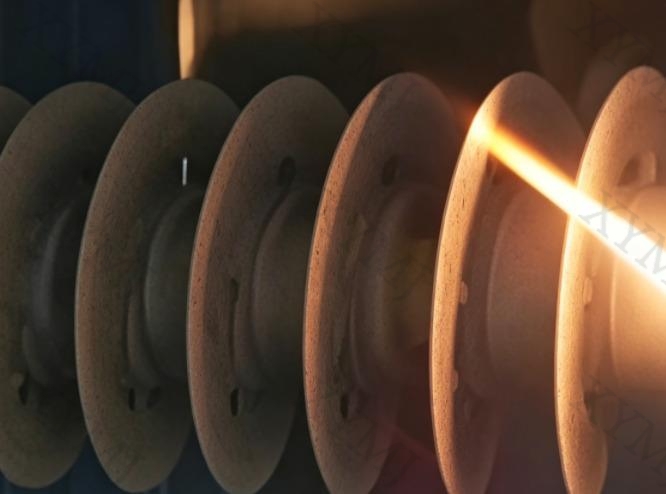
The main technique employed to deposit tungsten carbide coating is Thermal Spraying Technique, and the underlying concept of this technique includes heating of the powder into either liquid or semi-liquid form using a heat source, and then propelling it with a pressurized gas towards the substrate surface.
Presently, there are three well-developed techniques that are widely utilized in industries.
1. HVOF (High-Velocity Oxygen-Fuel)
Gaseous fuel (such as propane, propylene, or hydrogen) or liquid fuel (such as aviation kerosene) is mixed with high-pressure oxygen and continuously burned in a combustion chamber. The resulting high-temperature gas expands and accelerates through a Laval Nozzle, generating a supersonic airflow that reaches 2 to 3 times the speed of sound (up to 1000–1500m/s). The powder is fed into this stream, heated, accelerated, and propelled outward.
Key Parameters:
Flame Temperature: 2500℃ – 3100℃
Particle Impact Velocity: 600 – 800m/s
Bond Strength: > 70MPa (frequently reaching 80 – 90 MPa)
Characteristics: Because the particles possess immense kinetic energy, the coating becomes highly dense. The relatively lower flame temperature reduces the tendency of the tungsten carbide powder to oxidize or undergo “decarburization” during flight, making it the process that delivers the most stable coating quality.
2. HVAF (High-Velocity Air-Fuel)
The fundamental principle is similar to HVOF, but compressed air is used instead of expensive pure oxygen.
Key Parameters:
Flame Temperature: 1800℃ – 2100℃
Particle Impact Velocity: 700 – 900m/s
Characteristics: The flame temperature is lower, while the particle flight velocity is even higher than that of HVOF. This ensures virtually no decarburization of the powder, perfectly preserving the original micro-crystalline structure of the raw powder. As a result, the coating’s toughness (showing excellent ductile-to-brittle transition temperature performance) and resistance to impact cracking are elevated to the next level.
3. Plasma Spraying
A DC electric arc is used to ionize working gases (such as argon, nitrogen, hydrogen, or helium), generating a high-temperature plasma arc of tens of thousands of degrees. This serves as the heat source to melt and spray the powder.
Key Parameters:
Core Temperature: 10000℃ – 16000℃
Particle Flight Velocity: 200 – 400m/s
Characteristics: The plasma temperature is excessively high. While it is perfect for oxide ceramics (such as alumina or titania), when used for tungsten carbide, the extreme temperature causes severe decomposition into W or W₂C (severe decarburization), which have much lower hardness. Therefore, except in highly specialized environments like controlled atmosphere or Vacuum Plasma Spraying (VPS), standard Atmospheric Plasma Spraying (APS) is generally not the preferred choice for tungsten carbide.
Tungsten Carbide Coating vs. Hard Chrome Plating
Before the tightening of environmental regulations, Hard Chrome Plating was the dominant surface treatment method for wear resistance. However, under current industrial standards, tungsten carbide is launching a comprehensive, next-generation replacement campaign to phase it out.
1. In-Depth Differences in Performance
Micro-cracking: During the deposition process, hard chrome plating naturally develops micro-cracking networks due to the release of internal residual stresses. When subjected to alternating loads or corrosive media, these cracks act as “highways” for corrosive elements to penetrate, leading to rapid substrate corrosion and causing the plating to flake off in sheets. In contrast, HVOF tungsten carbide coatings exhibit a microscopically layered, densely packed structure with no through-thickness cracking.
Fatigue Life: Electroplating hard chrome significantly reduces the fatigue strength of the substrate metal—by up to 50%. Conversely, due to the high kinetic energy impact of particles, HVOF spraying produces a “shot peening” effect on the substrate surface. This introduces Residual Compressive Stress at the interface between the coating and the substrate, which actually improves the fatigue life of the component.
2. Environmental and Economic Benefits
Environmental Compliance: The electroplating wastewater produced during hard chrome plating contains Hexavalent Chromium, a potent carcinogen. Consequently, it is facing strict restrictions and phase-outs by global environmental regulations (such as the EU’s REACH regulation and US EPA policies).
Green Manufacturing: Tungsten carbide thermal spraying is a purely physical and mechanical deposition process. It generates no toxic wastewater, fully aligning with the green industrial standards for sustainable development.
How to Ensure the Output of High-Quality Tungsten Carbide Coatings?
Achieving a high-quality tungsten carbide coating depends on much more than just the few minutes of the actual spraying process; it is a comprehensive piece of systems engineering:
1. Strict Surface Preparation
Degreasing and Cleaning: The substrate must undergo high-temperature baking or chemical solvent treatment to completely remove any oil and grease trapped within its pores.
Corundum Grit Bombarding (Surface Roughening): Corundum, which is high-grade aluminum oxide grit, is bombarded onto the substrate using certain pressures and angles in order to provide the desired roughness to the surface (Ra 6.3 – 12.5µm). This process not only removes the oxide layer on the surface of the substrate but also multiplies the surface area, making mechanical bonding possible when the spray particles strike the surface.
2. Precision Post-Processing: Diamond Grinding
The as-sprayed surface of the tungsten carbide coating is a rough surface (Ra=4–8 μm) that cannot be used in an industrial process since it causes excessive wear to the other parts it works against.
The Machining Difficulty: Since the hardness value of the coating is above 1300 HV, normal high-speed steel or carbide cutting tools or standard alumina and silicon carbide grinding wheels cannot possibly cut or grind the coating. Attempting to use them results in severe wheel wear and risks burning the coating.
The Solution: Precision Grinding requires low-speed operations and large amounts of coolant along with the use of highly concentrated resin or metallic bonded Diamond Grinding Wheels.
The Final Output: Through precision grinding and diamond wheel polishing, the coated surface becomes mirror-smooth (Ra ≤ 0.1 μm) while maintaining tight tolerances for dimensions down to the micron level.
Typical Industrial Applications of Tungsten Carbide Coatings Across Sectors
Today, tungsten carbide coatings have become standard specifications for critical components across multiple technology-intensive and capital-intensive industries:
1. Steel & Metallurgy
Tension rolls, guide rolls, and wire drawing rolls used in continuous steel manufacture and metallurgy face extreme compressive loading and very high frictional forces from metal-to-metal contact. The conventional surface layer is susceptible to the problem of galling, leading to imperfections that become permanently etched onto the resulting sheet of steel.
The Solution: Coating the surface with a high hardness layer of tungsten carbide reduces the metal affinity to such an extent that there is no formation of micro-welds at high temperatures and pressure conditions.
Specifications: This not only exponentially extends the replacement and maintenance cycles of the rolls but also serves as the critical technology for ensuring “zero defects” on sheet surfaces in high-end automotive and home appliance steel production lines.
2. Oil & Gas Industry
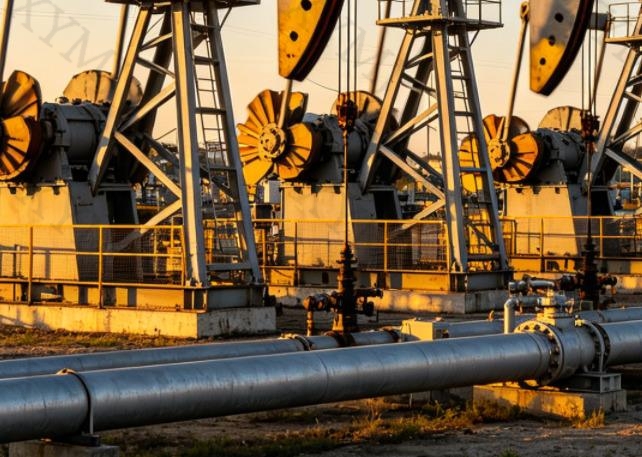
In oil and gas exploration and extraction, metal-to-metal seated ball valves, mud pump plungers, and downhole drilling tools operate in notoriously harsh environments. These components endure fierce erosion from high-concentration quartz sand, coupled with acidic electrochemical corrosion triggered by hydrogen sulfide (H₂S) and carbon dioxide (CO₂).
The Solution: The industry has widely adopted HVOF-sprayed WC-10Co-4Cr coatings as a standard. The cobalt-chromium matrix delivers exceptional self-passivating corrosion resistance, while the tungsten carbide particles block solid particle erosion.
Specifications: After precision grinding, the coating thickness is typically maintained between 0.15–0.25mm, striking a perfect balance between service life and crack resistance.
3. Paper & Printing Machinery
The calender and corrugating rolls on modern paper-making machines are constantly subjected to micromachining from fillers such as calcium carbonate and talc incorporated into the fibers of the paper. Moreover, the high humidity inside the factory causes these machines to be very prone to rusting.
The Solution: Due to its incredibly low porosity, tungsten carbide coating prevents any chemical penetration from the pulp paper.
Specifications: After being polished with diamonds to an extremely high degree of precision, the surface of the coating is mirror-smooth (Ra ≤0.1 μm), ensuring ultimate protection against wear without snags or tears on high-speed paper manufacturing processes.
4. Aerospace Applications
Aircraft landing gear actuator sleeves, helicopter rotor main shafts, and gas turbine blades must frequently endure extreme alternating loads and fretting wear during service.
The Solution: HVOF-sprayed tungsten carbide coatings have now become the premier technology to completely replace traditional hard chrome plating in this sector. The high kinetic energy impact inherent to the process introduces residual compressive stress at the coating interface, significantly enhancing the fatigue resistance of the components.
Specifications: Currently, this process fully complies with stringent international aerospace standards, including AMS 2447.
Conclusion
With the ever-growing need for improved resistance to wear and tear, increased reliability, and adherence to environmental laws in the production of modern industrial machinery, Tungsten Carbide Coating Technology is today seen as a fundamental technology in modern surface technology. Be it in oil and gas, mining operations, power plants, or advanced manufacturing processes; there will be no denying the fact that tungsten carbide coating significantly increases the lifespan of components and enhances overall efficiency.
Should your machinery constantly be plagued with extreme wear, erosion, or corrosion, then a high-grade tungsten carbide coating solution would most certainly be a prudent decision for you.