
Wear Resistant Materials: Which Material Type to Choose?
In modern industrial manufacturing, mechanical equipment “wear and tear” is one of the primary drivers of high maintenance costs and prolonged downtime. Whether in mining machinery, cement production, automotive manufacturing, or heavy equipment sectors, choosing the right wear-resistant materials is critical to extending equipment lifespan and boosting production efficiency.
Here, we will provide a comprehensive analysis of the mainstream wear-resistant materials available on the market, the specific wear conditions they combat, and how to scientifically select the right material based on your actual operational needs.
Table of Contents
What are Wear-Resistant Materials? Why are They Crucial?
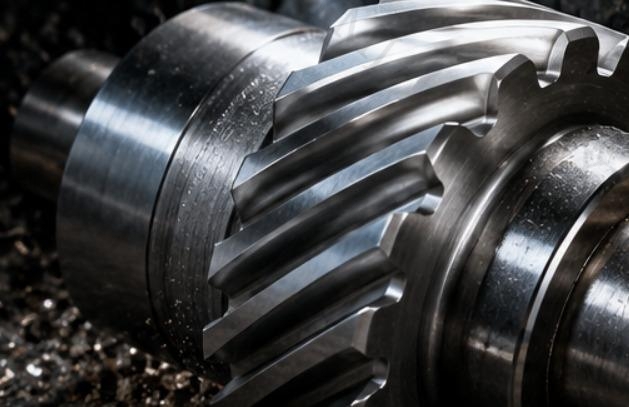
Wear-resistant materials are those that have been formulated with unique compositions or microstructures that help them preserve their surface quality even at high levels of friction, impact, erosion, or abrasion. Incorporation of high-end wear-resistant materials offers the following advantages apart from economic benefits:
Reduced Downtime Losses: Minimizes unscheduled production halts caused by frequent component replacements.
Enhanced Energy Efficiency: Maintains smooth equipment surfaces, reducing frictional resistance and energy consumption.
Improved Product Quality: Prevents contamination of the final product caused by material spalling or flaking (crucial in food or pharmaceutical industries).
Common Types of Industrial Wear-Resistant Materials
Different industries face vastly different wear conditions (such as abrasive wear, erosive wear, corrosive wear, etc.). To extend equipment life and reduce downtime costs, five mainstream wear-resistant material solutions have emerged in the market:
1. Tungsten Carbide
Tungsten carbide is manufactured by the process of sintering tungsten carbide powder at high temperatures with a metal binder like cobalt or nickel. It has Rockwell hardness up to HRA 88-94, which is next only to diamonds. Due to its structure being both ceramic and metal, it has very high compressive strength. The material’s abrasion resistance is several times higher than that of usual hardened steel.
Typical Applications: Oil drilling tools, high-pressure valve seats and cores, precision wear-resistant bushings, mechanical seal rings, and core flow-control components for pumps and valves.
Strategic Value: For enterprises striving for continuous operation and striving to minimize Total Cost of Ownership (TCO), tungsten carbide is the optimal solution to significantly reduce maintenance frequency.
2. Hardened Steel
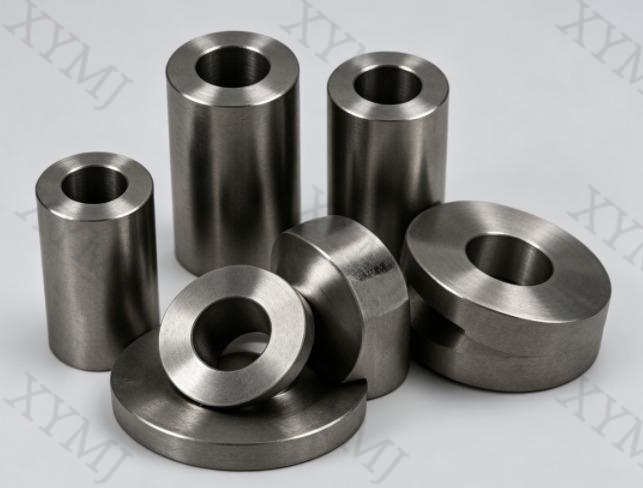
Hardened steel is applied to carbon or alloy steel that has been subjected to heat treatments, like through hardening, carburizing, or induction hardening, to obtain a martensitic structure on the surface of the metal.
Being the foundation of machine building, it has three main benefits, which include good machinability, good cost effectiveness, and great impact resistance, so that it does not break apart suddenly during violent vibrations. Nevertheless, it is much less hard and wears out faster than tungsten carbide and ceramics.
Typical Applications: Non-core structural parts of construction machinery, transmission gears, shafts, and pins where budget control is strict and wear conditions are not extreme.
3. Technical Ceramics
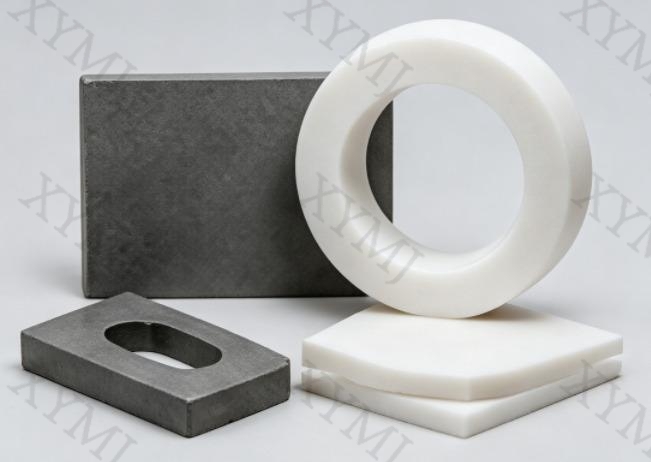
Technical Ceramics, represented in the forms of alumina, zirconia and silicon nitride, can be described as having the outstanding characteristic of a unique crystalline structure, which provides them with extremely high hardness and good resistance to chemical corrosive attacks with acids and alkalis.
Technical ceramics have mechanical stability even under extremely hot conditions over 1000 °C. Nevertheless, due to the absence of metallic ductility, they are brittle materials with poor shock resistance.
Typical Applications: Anti-corrosive chemical pipelines, cyclone liners, wear components in electronics manufacturing, high temperature bearings.
Usage Form: They are mostly processed as tiles, patches, or internal liners.
4. Chrome White Iron
Chrome white iron is a specialized cast iron with a chromium content ranging from 11% to 30%. During heat treatment, a large volume of high-hardness M₇C₃-type blocky carbides precipitate within the matrix, enabling it to easily withstand the continuous scratching of large-particle, high-hardness materials.
Compared to tungsten carbide, which requires precision machining, chrome white iron supports large-tonnage, one-piece industrial casting, offering relatively lower manufacturing costs combined with decent impact resistance.
Typical Applications: Slurry pump impellers, crusher hammers, impact liners, and material transport pipelines. It serves as the backbone of the mining and cement/building materials industries.
5. Polyurethane
Polyurethane (PU) is a polymer synthetic material that combines the elasticity of rubber with the strength of plastic. Completely different from rigid materials, polyurethane takes an “overcoming rigidity with flexibility” technical approach.
It exhibits very good toughness to shock and vibration damping cushioning, along with a very low coefficient of friction. The material energy imparted during impact is absorbed by virtue of elastic deformation, and it works in quiet manner. Moreover, the very good resistance to oil and water along with smooth surface ensures that no moisture fine material, such as coal and clay, gets adhered.
Typical Applications: Mining vibrating screens, scraper blades of belt conveyors, and discharge chute buffers.
Wear-Resistant Materials Performance Comparison Table
To facilitate quick and intuitive material selection, the comprehensive performance of these materials is compared in the table below:
| Material Type | Surface Hardness | Wear Resistance | Corrosion Resistance | Impact Resistance | Core Recommended Scenarios |
| Tungsten Carbide | Extremely High (HRA 88-94) | Extremely High | Good (Depending on binder phase) | Good | High-pressure valves, precision pump parts, high-end wear components |
| Technical Ceramics | Extremely High | Extremely High | Excellent (Resistant to strong acids/alkalis) | Fair (Brittle) | Chemical anti-corrosion, high-temperature pipes, metal-free environments |
| Chrome White Iron | High | High | Fair | Good | Heavy-duty mining crushing, slurry pumps, heavy-load liners |
| Hardened Steel | Medium | Medium | Fair | Excellent | Complex structures, low-to-medium wear parts with high toughness requirements |
| Polyurethane | Low | Medium | Excellent (Resistant to oil/water) | Excellent | Screening, conveying buffers, anti-sticking conditions |
How to Choose the Most Suitable Wear-Resistant Material?
In actual industrial production, no single wear-resistant material is a “silver bullet.” Blindly pursuing the highest hardness or the lowest price often leads to premature equipment failure. Selecting wear-resistant materials is a systematic engineering task. We recommend that engineering and procurement teams evaluate choices based on four critical dimensions:
1. Accurately Diagnose the Primary Source of Destruction: Wear Type
Different wear mechanisms place entirely different demands on a material’s microstructure. Before selection, you must clarify what form of wear your equipment surface is enduring:
Erosion Wear: Under the scouring effect of high-velocity dust-containing gases or fluid slurries, the surface density or elasticity of the material becomes extremely important. The low-angle erosion generally prefers tungsten carbide, whereas nearly 90 degrees vertical impingement is preferred for high-polymer polyurethane.
Adhesion Wear: Adhesion wear takes place under highly loaded sliding surfaces of metal on metal. In material selection, never go for matching metals, but prefer complementary materials where one will be hard and the other soft, or else prefer tungsten carbide or polymer with self-lubricating properties.
Adhesive Wear: This often occurs at heavily loaded sliding interfaces between two metals, such as in bearings and valves. When selecting materials, avoid pairing identical metals; instead, adopt a “one hard, one soft” complementary material pairing, or choose tungsten carbide or polymers with self-lubricating properties.
Impact Wear: In case there is a drop of huge materials, then the material has to withstand wear along with having very high impact resistance. It would be wrong to just choose very hard but brittle ceramics as they will crack right away; in such cases, high-manganese steels, chrome white irons, or metal matrix composites have to be selected.
2. Fully Evaluate Boundary Conditions: Working Environment
The physical properties of materials can fluctuate drastically with environmental changes. The following “red line” indicators must be strictly verified:
Operating Temperature: This is the Achilles’ heel of polymer materials. If the working temperature exceeds 80°C–100°C, polyurethane and conventional Ultra-High-Molecular-Weight Polyethylene (UHMWPE) will soften and lose their wear resistance. If the environment exceeds 800°C (e.g., boilers, smelting furnaces), the focus must shift to silicon carbide ceramics or nickel-based high-temperature wear-resistant alloys.
Conditions of Pressure and Load: In the case of highly pressurized working conditions (like geological drilling or highly pressurized valves), the wear parts should have high compressive strength and high yield strength so that plastic deformation or creep does not occur under high pressures.
Corrosive Medium (pH Level): In cases of chemicals, pulp and paper industry, and marine engineering, any wear resistance quality is of no use. The acids or salt sprays in the air will easily destroy the passivating layer of metals, thus starting a vicious circle of “corrosion-wear.” Here, chemical inertness is more important than hardness; rust-resistant tungsten carbide is very much recommended.
3. Quantify Downtime Risks: Service Life Expectancy
The continuity of the production line directly dictates the tolerance for material failure:
Core or High-Risk Critical Components: Such as core chemical reactor valve cores, power plant main fan impellers, and oil drilling bits. The failure of these components will paralyze the entire production line, and the replacement process is highly complex. For these conditions, high-performance materials like tungsten carbide or precision ceramics must be chosen without hesitation to ensure an absolute safety cycle.
Easily Replaceable or Non-Core Components: For auxiliary pipeline liners or scrapers that are easy to disassemble and do not disrupt the entire operation, life expectancy requirements can be relaxed slightly in favor of hardened steel or economical polymer materials.
4. Calculate the Big Economic Picture: Total Cost of Ownership (TCO)
Mature procurement decisions should look beyond the initial purchase price and focus on the Total Cost of Ownership (TCO). While the upfront cost of high-performance materials like tungsten carbide is noticeably higher than that of ordinary hardened steel, its true economic value can be calculated using the following formula:
Total Equipment Operating Cost = (Material Procurement Cost + Single Downtime Loss + Labor Replacement Cost)✖️Replacement Frequency
The benefits of investing in high-performing materials include:
Fewer Maintenance Needs: When others need to replace a piece of equipment ten times, you will only need to do so once. This means enormous savings in both manpower and income loss due to the downtime.
Continuous Performance of Machines: The wear-resistant components which prevent deformation over an extended period ensure that the seal of your pumps/valves or the aerodynamic stability of your fans is intact.
Why is Tungsten Carbide an Ideal Choice? How to Choose Tungsten Carbide Suppliers?
With its extreme hardness of HRA 88-94, an ultra-long lifespan that is 5 to 20 times that of ordinary steel, and a perfect balance of high compressive strength and good toughness, tungsten carbide has become the premier choice for the majority of severe industrial conditions.
However, a premium wear-resistant part depends not only on the material itself but heavily on the downstream manufacturing processes. When evaluating tungsten carbide suppliers, it is recommended to focus on these five core dimensions:
Materials Engineering Expertise: The ability to accurately recommend or formulate the most compatible tungsten carbide grade based on actual working conditions (pressure, media).
Custom Blueprint Capability: Possessing a full-scale non-standard custom technical team that precisely controls the sintering shrinkage rate of powder metallurgy.
Precision Machining Capacity: Equipment with high-precision tungsten carbide post-processing machinery, such as diamond wheel grinding, slow-feeding wire cut EDM, and electrical discharge machining.
Non-Destructive Testing (NDT) System: Incorporating ultrasonic flaw detection, metallographic testing, and other processes to strictly eliminate internal blowholes or micro-cracks.
Stable Delivery Capability: Possessing large-scale production capacities and an agile supply chain to ensure the safety of the customer’s assembly lines and production schedules.
Looking for the Perfect Tungsten Carbide Wear Parts for Your Conditions?
XYMJ offers a one-stop solution encompassing grade selection, custom blueprint design, and precision machining for everything from wear nozzles and precision bushings to valve components and complex mechanical seal rings. Contact us today to submit your operational requirements and receive a free technical evaluation and custom quote!