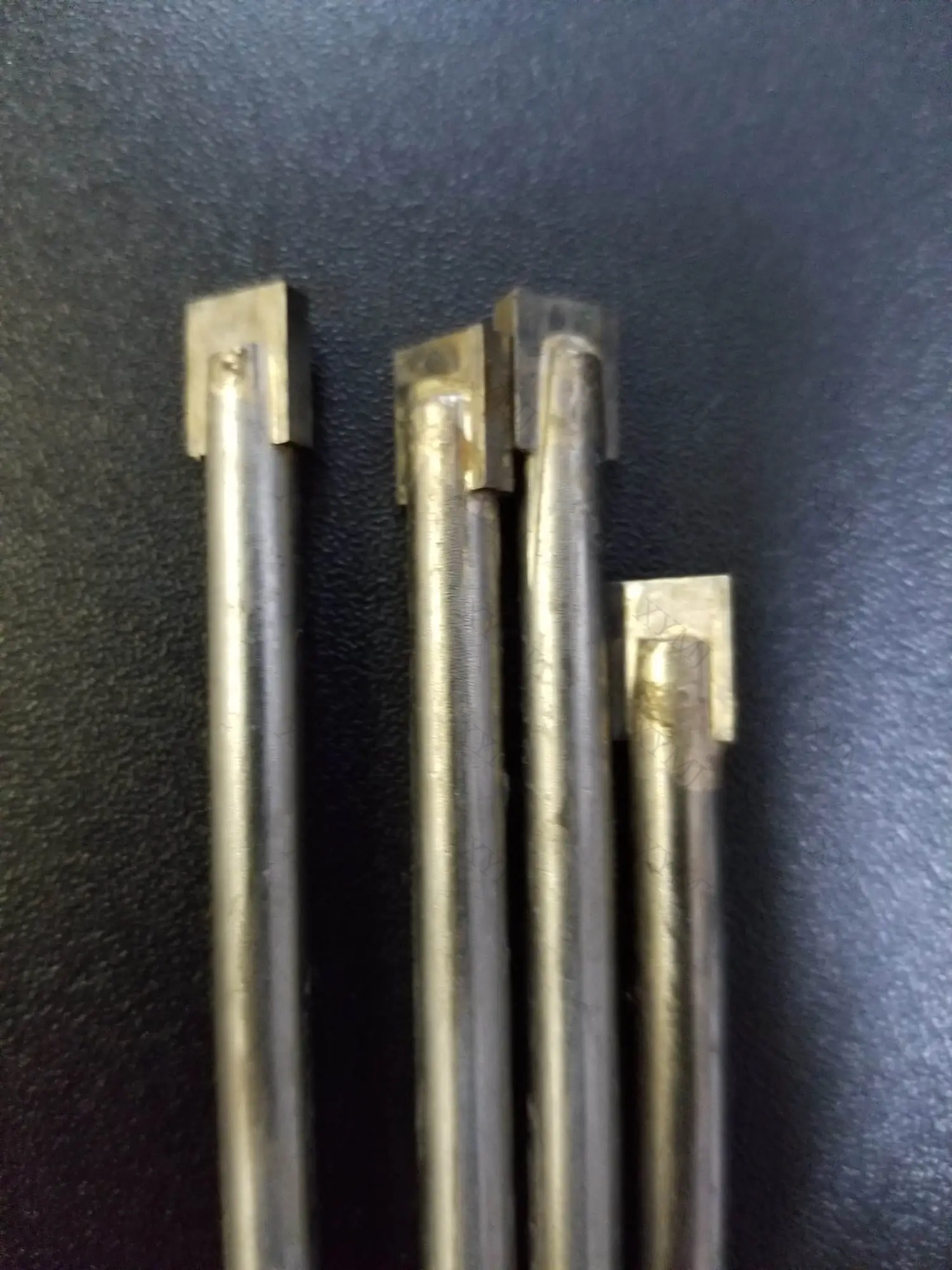
A Brief Analysis of the Weldability of Cemented Carbide Grades
When manufacturing cemented carbide tools, significant differences in weldability are observed between parts made from different grades. Using the wrong grade or failing to adjust the process accordingly can easily lead to post-weld cracking or spalling. This article introduces the welding characteristics of common cemented carbide grades to help you make informed decisions quickly.
1. YG Series (Tungsten-Cobalt Alloys):
- YG3X, YG3: high hardness, low cobalt content, poor thermal conductivity and high welding stress make these grades most prone to cracking. Low-melting-point brazing alloys must be used, and the material must be preheated before welding and cooled slowly afterwards.
- YG6 and YG8: Moderate cobalt content, good toughness and thermal conductivity, excellent weldability and high versatility. Suitable for conventional copper- or silver-based brazing.
- YG11 and YG15: High cobalt content and high toughness, effectively absorbing welding stresses and offering excellent weldability and high process tolerance.
2.YT Series (Tungsten-Cobalt-Titanium Alloys):
Contains titanium, resulting in poorer thermal conductivity than the YG series. The coefficient of thermal expansion differs significantly from that of the steel substrate, making these alloys highly prone to cracking during welding. This is particularly true of YT15 and YT30, for which the use of low-melting-point silver brazing alloys is required, as well as strict control of the preheating process (400–500°C) and the cooling process. YT5 offers slightly better toughness and is somewhat easier to weld.
3. Ranking of Welding Difficulty
Easiest to most difficult: YG15, YG11, YG8, YG6, YT5, YW, YT14, YT15, YG3, YG3X, YT30.
4. Brief recommendations:
- High-hardness, low-cobalt grades (e.g. YG3X, YT15): Prioritise silver-based, low-melting-point brazing alloys. Perform full-section preheating and use asbestos ash for slow cooling after welding.
- Medium-to-high toughness grades (YG8, YG11, etc.): Copper-based brazing alloys (e.g. HL105) can be used, and high-frequency welding is highly efficient.
- Large-sized or irregularly shaped parts: It is recommended to use ‘sandwich’ buffer layer welding sheets to prevent stress cracking.
Understanding the welding characteristics of cemented carbide grades is the first step in ensuring tool life and reliability. If you require guidance on a specific grade, please feel free to contact us.