
Tungsten Carbide Tensile Strength: How Strong Is It Really?
In modern industrial manufacturing, Tungsten Carbide is renowned for its diamond-like hardness and exceptional wear resistance. However, beyond mere “hardness,” engineers and procurement specialists are often more concerned with a critical parameter: tungsten carbide tensile strength.
Tensile strength directly determines whether a material will fracture under tension, making it a vital factor in practical engineering applications. This article provides a systematic analysis of the tensile strength characteristics of tungsten carbide, the factors influencing it, and its practical significance in industry.
Table of Contents
What is the Tensile Strength of Tungsten Carbide?
Before understanding the tensile strength of tungsten carbide, let’s first clarify what tensile strength means.
Tensile strength refers to the maximum stress a material can withstand while being stretched or pulled before breaking. It is typically measured in MPa (megapascals) or GPa (gigapascals).
In simple terms:
Tensile strength has an inverse relationship with the likelihood of being torn apart.
In practice, materials are stressed until they break, and the highest stress they can withstand without breaking is measured.
Whereas steels or aluminum alloys are ductile metals, tungsten carbide is a classic example of a brittle material. Brittle materials have relatively lower tensile strength than ductile materials. Tungsten carbide shows minimal plasticity prior to fracturing.
As a result of the Co content, tungsten carbide may have tensile strengths of between 345 MPa and 550 MPa. However, their compressive strength could exceed 3000 MPa.
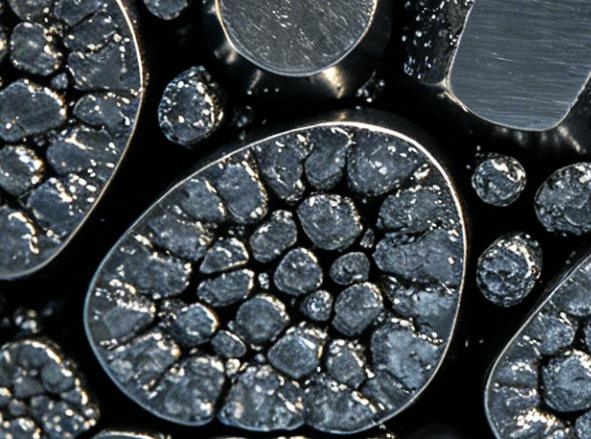
tungsten carbide tensile strength
Material Comparison Table: Tungsten Carbide vs. Engineering Alloys
| Material Name | Tensile Strength (MPa) | Compressive Strength (MPa) | Hardness (HRA/HRC) |
| Tungsten Carbide (WC-10%Co) | ~500 | 4500 – 5000 | 89 – 92 HRA |
| 4140 Alloy Steel | 650 – 1000 | 650 – 1000 | 25 – 35 HRC |
| Titanium Alloy (Ti-6Al-4V) | 900 – 1100 | 970 | 36 HRC |
Why Is Tungsten Carbide “Very Hard but Prone to Brittle Fracture”?
The typical material characteristics of tungsten carbide can be summarized as: high hardness + low ductility + high brittleness. This is also the fundamental reason why it is highly wear-resistant but sensitive to impact in industrial applications.
The main reasons include:
1. Crystal Structure Determines Brittleness
Tungsten carbide is a typical cermet (ceramic-metal composite) material, with a crystal structure dominated by strong covalent bonds.
This structure provides extremely high hardness and wear resistance, but it also restricts dislocation movement (the mechanism that allows plastic deformation).
As a result, when subjected to tensile or impact stress, tungsten carbide cannot absorb energy through deformation like steel. Instead, it is more likely to fracture directly.
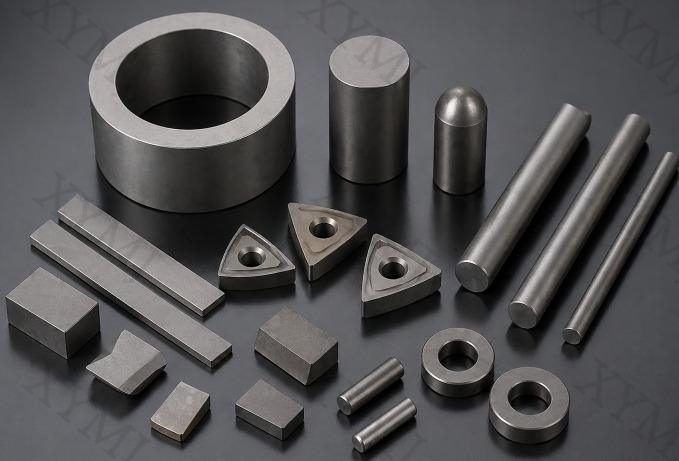
2. Binder Phase Proportion Affects Toughness
Tungsten carbide is typically composed of WC particles and a cobalt (Co) binder phase. The cobalt acts as a “bridge” and provides some degree of toughness.
Lower cobalt content:
- Higher hardness
- Better wear resistance
But reduced tensile strength and fracture toughness, making it more prone to brittle failure
Higher cobalt content:
- Improved toughness
- Better impact resistance
But slightly reduced hardness and wear resistance
In practice, a balance between hardness and toughness must be achieved based on the application.
3. Rapid Propagation of Microcracks
There may be microscopic defects or microcracks within tungsten carbide. Under tensile stress or impact loading, these microcracks can propagate rapidly.
Because the material lacks plastic deformation to blunt crack tips, once a crack initiates, it can quickly spread through the material, leading to sudden brittle fracture.
What Factors Affect the Tensile Strength of Tungsten Carbide?
The tensile strength of tungsten carbide is not a fixed physical constant; rather, it is a variable influenced by the combination of chemical composition, microstructure, and manufacturing processes. Below are the four core factors that determine its tensile performance:
1. Cobalt Content
Cobalt (Co) is the “glue” that holds the tungsten carbide (WC) particles together, encircling them and holding them in place.
Positive Correlation: In a specific range (normally between 6% and 25%), an increase in the amount of cobalt results in an improvement in toughness. Since cobalt is very effective in stopping the propagation of cracks, the tensile strength (as well as Transverse Rupture Strength, TRS) improves with more cobalt.
The Trade-off: Higher cobalt content leads to a decrease in hardness and wear resistance. Engineers must find the “sweet spot” based on whether the application requires impact resistance or wear resistance.
2. Grain Size
The size of the tungsten carbide particles directly dictates the microstructural characteristics of the material.
Fine Grain (Fine/Ultra-fine Grain): Smaller particles result in a higher density of grain boundaries per unit volume. These boundaries act as barriers to dislocation movement and crack expansion. Consequently, fine-grained tungsten carbide usually offers a superior combination of high strength and high hardness.
Coarse Grain: While coarse-grained materials may perform better in specific environments (such as resistance to thermal fatigue), their tensile strength is generally inferior to fine-grained grades.

3. Sintering Process
Sintering is the crucial process wherein the powder gets converted to a dense metal alloy. Temperature, pressure, and atmosphere control play an essential role here.
Densification: The process of high-quality liquid phase sintering ensures that the cobalt is evenly distributed within the carbide particle voids.
Defect Minimization: Overheating results in the formation of abnormally large grains, whereas underheating causes inadequate bonding. Hot Isostatic Pressing (HIP) technique is commonly employed for removing any micro-defects and significantly enhancing tensile strength.
4. Material Porosity
Porosity is known as the “silent killer” that deteriorates the properties of tungsten carbide. As the material exhibits high notch sensitivity, even the presence of small voids serves as a stress concentration point.
Cracking Initiation Mechanism: Under tensile loading, stresses develop quickly near the edges of any pores. Consequently, cracks are generated and propagated at stress levels much lower than the theoretical strength of the material.
Industry Requirements: The manufacture of high-grade tungsten carbide necessitates very low porosity levels (for instance, A02 or B02).
Industrial Significance of the Tensile Strength of Tungsten Carbide
Although tensile strength is not the primary advantage of tungsten carbide, it still plays an important role in determining the material’s reliability and crack resistance in real-world applications.
1. Cutting Tools and Machining Tools
During cutting processes, tungsten carbide cutting tools are subjected to shear forces and localized tensile stress. A balance between high hardness and crack resistance is required; otherwise, chipping or fracture may occur.
2. Mining and Drilling Tools
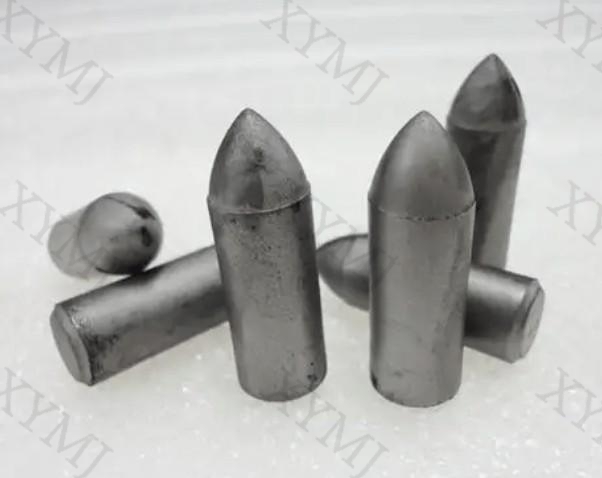
These tools operate under high impact and heavy load conditions. While compressive strength is more critical, insufficient tensile strength can accelerate crack propagation and reduce service life.
3. Molds and Stamping Components
Under repetitive loading, good tensile performance helps suppress crack growth and improves structural stability and durability.
4. Petroleum Industry and Machinery
For the cases involving high pressure and high levels of wear, wear resistance is the critical criterion, although tensile strength also contributes to the reliability of parts in complicated stress situations.
Tensile strength, although not a fundamental factor in terms of material performance, becomes essential for avoiding brittle failure and providing reliable stability of the structure of tungsten carbide.
Engineering Recommendations: How to “Avoid Weaknesses and Maximize Strengths”
Tungsten carbide has very high hardness and wear resistance, although it possesses comparatively low tensile strength and toughness. Hence, while designing the components, its strengths should be exploited without creating any stress that is detrimental to the material.
1. Avoid Tensile Loading Design
Tungsten carbide performs best under compressive stress, rather than tensile or bending stress. For this reason, design structures should ensure that the material is mainly subjected to compression.
For example, when designing tungsten carbide bushings or wear components, an interference fit is commonly used to press the carbide insert tightly into a steel body. This design ensures the material is predominantly under compressive stress, significantly reducing the risk of cracking.
2. Eliminate Sharp Corners and Stress Concentration
Due to its brittle nature, tungsten carbide tends to be very sensitive to the concentration of stress. In the course of designing and shaping, no sharp edges should be introduced.
It is important that all inside corners and transitions have some radius of curvature, thus eliminating stress peaks and preventing formation of cracks in the material.
3. Select Appropriate Material Grades
Different cobalt contents and grain sizes result in significantly different performance characteristics. Selection should be based on operating conditions:
Applications of high impact (for example, cold heading dies, stamping dies): Use tungsten carbide with higher amounts of cobalt (about 15%–25%) to provide better toughness and resistance against impacts.
High resistance against wear (nozzles, seals, wear components): Use fine-grain materials containing a low amount of cobalt (about 3%–6%) to get maximum wear resistance.
Key design concepts in engineering applications include: preference for compressive loading, stress concentration minimization, and material grade selection according to operating conditions.
Final Thoughts
Generally, tungsten carbide is an ordinary material for engineering use, with properties that include “hardness and low ductility.” Although this metal may not have particularly remarkable features when considering tensile strength alone, its best attributes will actually lie in its superior compressive strength and great wear resistance.
When it comes to the use of such materials in industry, it becomes very important to opt for stable and effective tungsten carbide. Such tungsten carbide manufacturers as XYMJ are specialists in producing carbide-based materials, and can offer high-quality cemented carbide solutions for different purposes.
