
Brazing and Assembly Techniques for Cemented Carbide Components
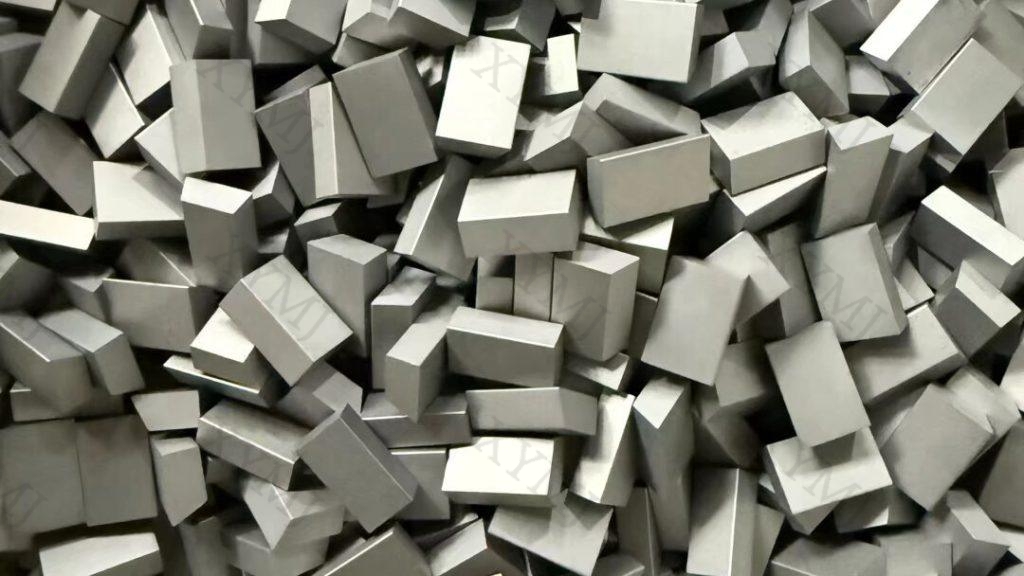
In the cemented carbide industry, combining a tungsten carbide working surface with a steel body is a highly favored design. This composite approach optimizes material costs while extending the tool’s overall working life by up to 5 to 10 times compared to standard steel. Designers typically utilize industrial adhesives, thermal shrink fitting, or brazing to secure the carbide to the steel substrate, ensuring structural integrity under rigorous working conditions.
However, executing this cost-effective design presents significant manufacturing challenges, primarily due to the severe mismatch in the Coefficient of Thermal Expansion (CTE). Tungsten carbide generally has a CTE of 4.5–7.0 × 10⁻⁶/℃, whereas standard steel expands at nearly double that rate, around 11–12 × 10⁻⁶/℃.
While cold joining (using industrial adhesives) or thermal shrink fitting can successfully bypass the thermal stresses that cause warping or cracking, they have strict limitations. Even high-performance adhesives typically degrade and risk detachment when operating temperatures awalys exceed 150°C to 200°C. Meanwhile, thermal shrink fitting is geometrically constrained and mostly restricted to cylindrical dies.
Consequently, metallurgical bonding—specifically brazing—is frequently the only viable solution, particularly for high-temperature applications. The difficulty of brazing escalates significantly if the workpiece is exceptionally long or thin (e.g., thickness below 3mm). To counteract the CTE mismatch, experienced technicians implement strict thermal control. Rather than applying a direct flame to the carbide—which risks thermal shock—they pre-heat the steel substrate (often to 300°C–400°C). The heat is transferred conductively from the steel to melt the brazing alloy (typically melting between 650°C and 850°C), ensuring a uniform and robust bond.
The most demanding configuration is joining two long rectangular strips, known as “flat brazing.” During the thermal cycle, the steel substrate generates tensile stress 2 to 3 times greater than the carbide. Without precise operational control, this massive shear stress at the interface will warp or outright fracture the rigid carbide part.
Ultimately, successfully joining cemented carbide to steel hinges on meticulously controlling the entire thermal cycle—from uniform pre-heating to isothermal slow cooling—and taking every precaution (such as utilizing sandwich brazing meshes) to minimize and dissipate residual interfacial stress.